“I Owe You an Apology, I Wasn’t Really Familiar With Your Game”: The Story Behind the Meme
Introduction
Internet culture has a habit of taking a single unscripted moment and turning it into a phrase that outlives its original context by years. One of the clearest examples of this is the meme now widely known as “I Owe You an Apology, I Wasn’t Really Familiar With Your Game.” What started as an offhand comment from a retired basketball star during a routine post-game interview eventually grew into one of the most recognizable reaction images on social media, used far beyond the world of sports to describe the simple act of being pleasantly surprised by someone you had underestimated.
Where the Phrase Came From
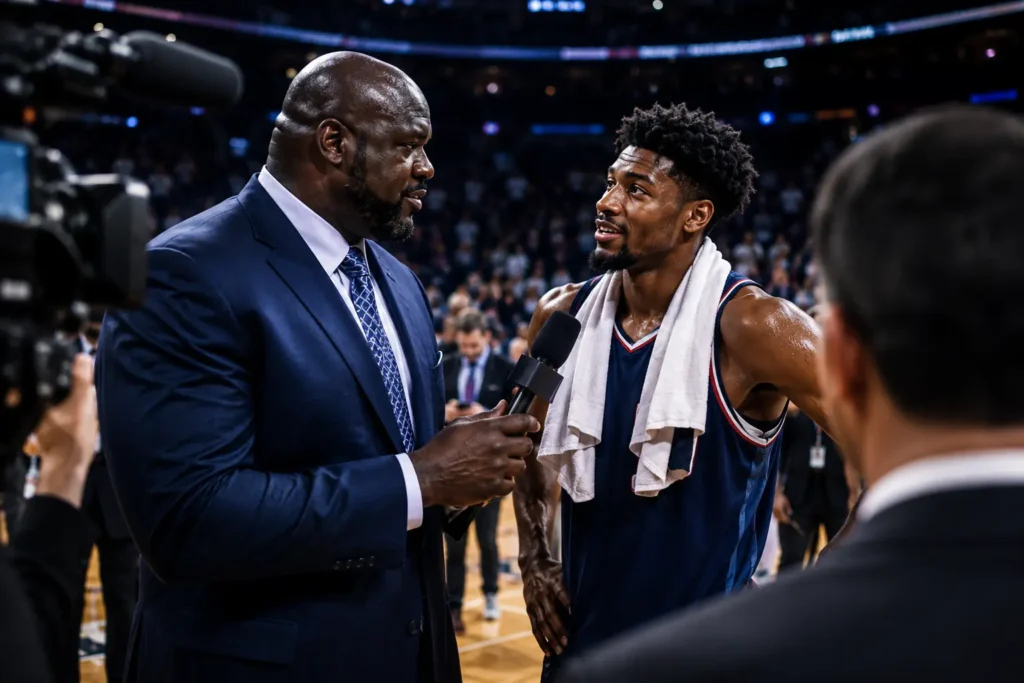
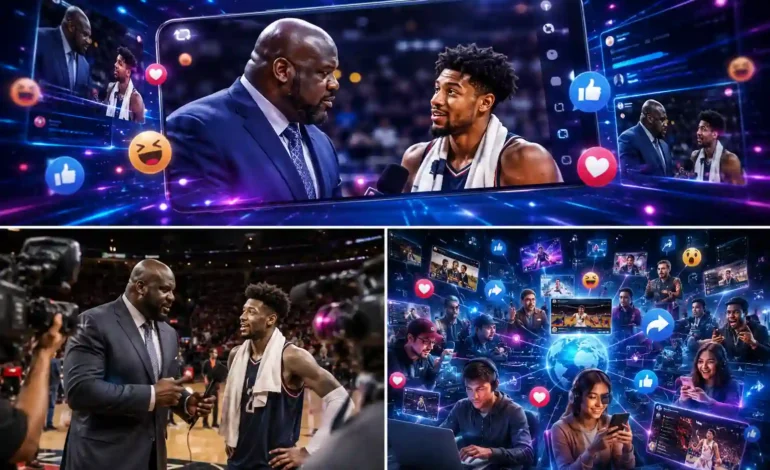
The origin point traces back to January 14, 2021, following a regular-season NBA matchup between the Houston Rockets and the San Antonio Spurs. During that game, Houston Rockets forward Christian Wood put together a strong outing, finishing with 27 points. His performance stood out enough that it caught the attention of commentators watching from the sidelines, including former NBA superstar Shaquille O’Neal, who was working as an analyst at the time.
In the post-game interview segment, O’Neal addressed Wood directly and admitted that he had underestimated him. He told Wood that he owed him an apology because he hadn’t been familiar with his abilities on the court. Wood, clearly amused by the admission, shot back with a good-natured jab, telling O’Neal that he was being “a casual” — a term used to describe someone who follows a sport without deep knowledge of its players.
That short, candid exchange between a basketball legend and a rising player is the entire seed from which the meme grew. It wasn’t scripted, it wasn’t dramatic, and at the time nothing suggested it would become an enduring piece of internet shorthand.
From Broadcast Clip to Viral Meme
The path from a live TV moment to a viral meme followed a familiar pattern. Shortly after the interview aired, a short video clip of the exchange was shared on Twitter by a user posting under the handle @r0bato. That initial post picked up a modest amount of engagement, gathering more than 150 retweets and over 1,100 likes.
Within just a couple of minutes, a much larger account dedicated to NBA news, @TheNBACentral, reposted the same clip to its own audience. That repost proved to have far more staying power, eventually accumulating more than 510,000 views, over 630 retweets, and close to 8,800 likes across the following two years.
On that same day, the moment took its most memorable visual form. The news account @theScore posted a two-panel image macro to Instagram, capturing the interview exchange in the still-image format that would go on to define the meme. That Instagram post alone drew more than 58,700 likes and effectively planted the flag for what would become an internet phenomenon.
The Meme Goes Dormant, Then Explodes
Despite the strong initial engagement, the image didn’t immediately take off as a widely used reaction meme. There was a considerable gap between the original interview in January 2021 and the point when the format saw broad adoption across social media, which didn’t happen until roughly a year and a half later, in May 2022.
The turning point can be traced to a specific tweet. On May 7, 2022, a Twitter user going by @SorokaPlsHeal used the image as a reaction within a tweet. That particular post only received around 60 likes, a modest number by viral standards, but it marked the beginning of the format’s second life as a reusable reaction image rather than just a record of a specific sports moment.
Momentum built from there. About two months later, on July 1, 2022, the account @LALeBron23 used the same image in a post referencing basketball analyst Brian Windhorst. That tweet performed significantly better, eventually collecting more than 2,600 retweets and nearly 27,900 likes over the following seven months.
From that point forward, usage of the meme accelerated throughout the second half of 2022. It became a go-to reaction specifically within sports commentary circles, deployed whenever a player delivered an unexpectedly strong performance that contradicted prior assumptions about their skill level.
Remixes and Variations
As is common with any meme format that reaches a critical mass of usage, “I Wasn’t Really Familiar With Your Game” soon spun off into edited variations that played with its original meaning. In October 2022, one such edit began circulating on Twitter with the caption altered to “You owe me an apology, you tricked me,” flipping the sentiment of the original exchange into something closer to feeling deceived rather than pleasantly surprised.
Around the same period, a second variation emerged that inverted the format entirely. This version carried the caption “You can’t fool me, I am familiar with your game,” repositioning the phrase as a statement of confidence rather than admitted ignorance. Both of these spin-offs demonstrate how a meme’s core visual and verbal structure can be repurposed to communicate the opposite sentiment from its original use, while still relying on audience familiarity with the source material to land the joke.
A Surprising Crossover With Manga
More than three years after the original interview, the phrase found an unexpected second wind through a completely different medium. On May 27, 2024, the manga series Jujutsu Kaisen published Chapter 261. In that chapter, the character Sukuna engages in a fight with Yuta, a former manga character whose readers may recall from other viral online trends involving the series. During the confrontation, Yuta reveals that he has mastered a cursed technique belonging to another character, Kenjaku, catching Sukuna off guard.
Following the fight, Sukuna offers an admission that closely mirrors O’Neal’s original apology. He tells Yuta that he apologizes for underestimating him and admits he hadn’t realized Yuta was capable of reaching that level. Fans of the series quickly noticed how closely the sentiment of Sukuna’s line echoed Shaq’s now-famous quote, and the comparison spread across manga and anime fan communities, giving the meme a renewed round of attention among an audience that may have had little connection to the original NBA context.
How the Meme Is Used Today

What makes “I Owe You an Apology, I Wasn’t Really Familiar With Your Game” durable as a meme format is how easily it translates outside of its original sports setting. At its core, the phrase captures a very relatable social moment: realizing you had misjudged someone’s abilities, character, or influence, and publicly walking that misjudgment back.
Online communities have applied the format to a wide range of situations that have nothing to do with basketball. It gets used to praise actors who deliver a performance that exceeds expectations for a particular role, with fans posting some version of the apology format directed at the actor’s name. It has also been applied to fandoms and public figures more broadly — for instance, expressing surprise at the scale of influence a musical artist’s fanbase can generate, such as sold-out stadium tours.
The format has even drifted into more personal, everyday usage among individuals, where someone jokingly apologizes to another person for having previously overlooked a quality about them, borrowing the meme’s language as an inside joke rather than a literal statement.
Quandale Dingle: Origin, Biography, Powers & Meme Explained
Why the Format Resonates
Part of the appeal of this particular meme lies in its built-in structure: a two-panel or two-line format that pairs an admission of prior doubt with a moment of vindication. That structure is simple enough to apply to almost any subject, which is a large part of why it has been able to migrate from live sports commentary, to Twitter reaction culture, to manga fandoms, and into everyday conversation among friends.
It also helps that the phrase itself has a self-aware, slightly humorous tone. O’Neal’s original comment wasn’t delivered as a grand or emotional statement — it was a fairly matter-of-fact acknowledgment, and Wood’s reply calling him “a casual” added a layer of playful ribbing that made the whole exchange feel lighthearted rather than serious. That tone has carried through into how the meme gets used today: it’s rarely deployed with genuine anger or resentment, and is instead treated as a good-natured way of admitting you were wrong about someone in a positive sense.
Conclusion
From a single post-game interview between Shaquille O’Neal and Christian Wood in January 2021, “I Owe You an Apology, I Wasn’t Really Familiar With Your Game” grew into one of the more versatile reaction formats on social media. Its journey — from an initial clip with modest engagement, to a viral Instagram image macro, to a dormant period, to a sudden explosion in popularity over a year later, and eventually a surprising echo in a completely unrelated manga series — illustrates how internet memes can take unpredictable paths to cultural relevance. Whatever the setting, the underlying sentiment stays the same: an honest, slightly humbled admission that someone deserved more credit than they were originally given.