The Violent Origins of the Chud Meme
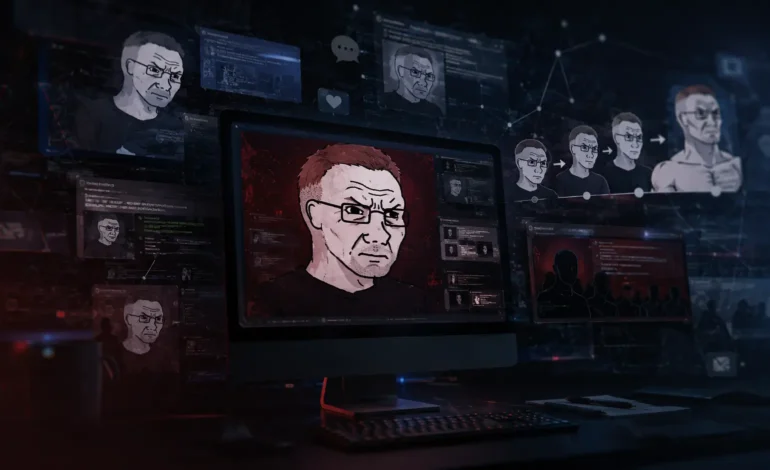
The internet has produced countless Wojak variations, but few carry the same controversial history as Chudjak. Also known as Poljak, the character is a variation of the Wojak meme that became closely associated with extremist internet culture, political mockery, and discussions surrounding online radicalization.
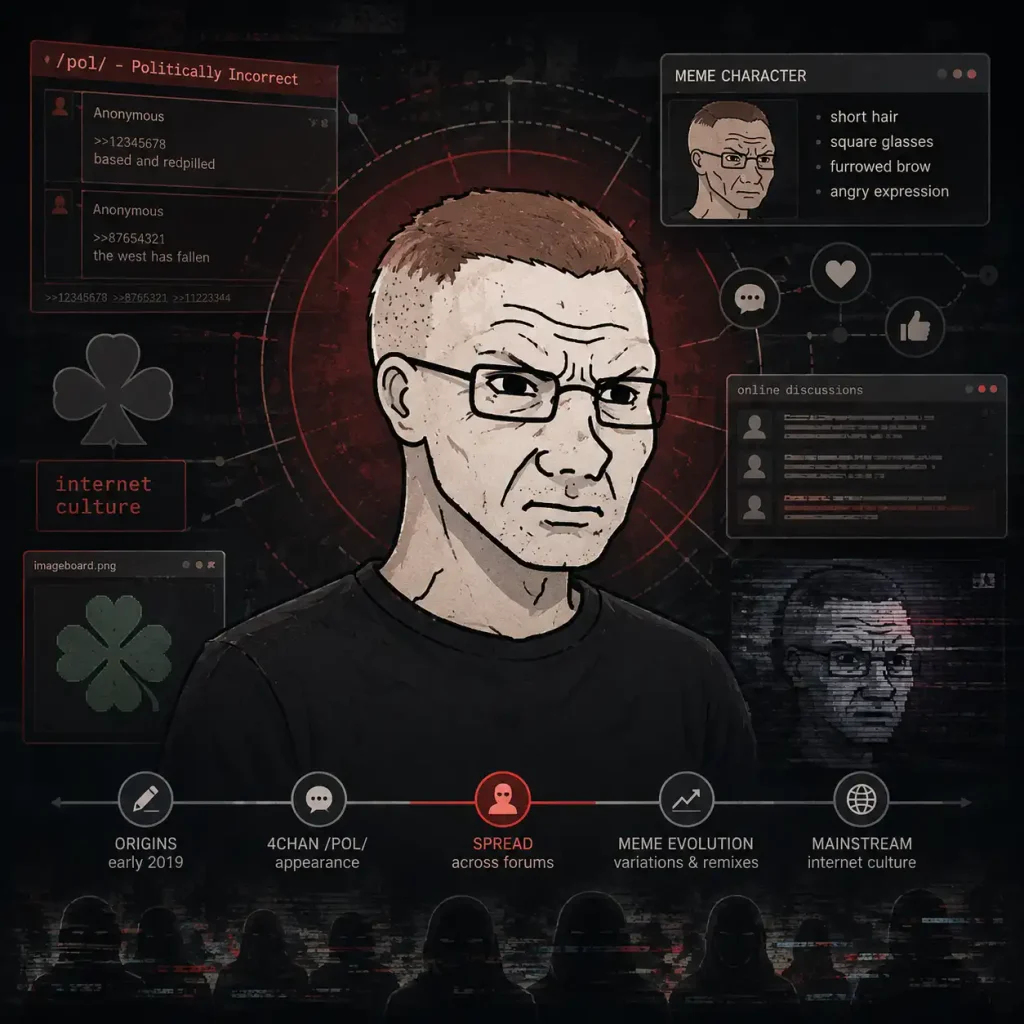
Recognized by features such as a short haircut, square-shaped glasses, and a permanently furrowed brow, Chudjak was designed to resemble the perpetrator of the 2019 El Paso Walmart shooting. Because of that connection, the meme has a darker origin than many other popular internet characters.
Over time, Chudjak moved beyond its original context. It appeared in political memes, reaction images, parody formats, and combinations with other characters such as GigaChad. Understanding the history of Chudjak therefore requires looking at its origins, the communities that used it, and how its meaning changed as it spread across the internet.
What Is the Chudjak Meme?
Chudjak is a Wojak-style internet meme character created around 2019. Like other Wojak variations, it uses a simplified cartoon face to communicate a particular personality or stereotype.
The character is usually identifiable through several recurring features:
- Short, closely cropped hair
- Square-rimmed glasses
- A tense or angry facial expression
- Prominent forehead lines
- A generally frustrated or aggressive appearance
Unlike many harmless Wojak variations, Chudjak became strongly connected with far-right and extremist online communities because of the identity of the person who inspired its appearance.
The meme was not simply created as a random caricature. Its visual design was intentionally based on the appearance of the perpetrator responsible for the 2019 mass shooting in El Paso, Texas. This connection became an important part of the character’s identity and explains why Chudjak remains one of the more controversial Wojak variations.
The Real-World Event Behind Chudjak
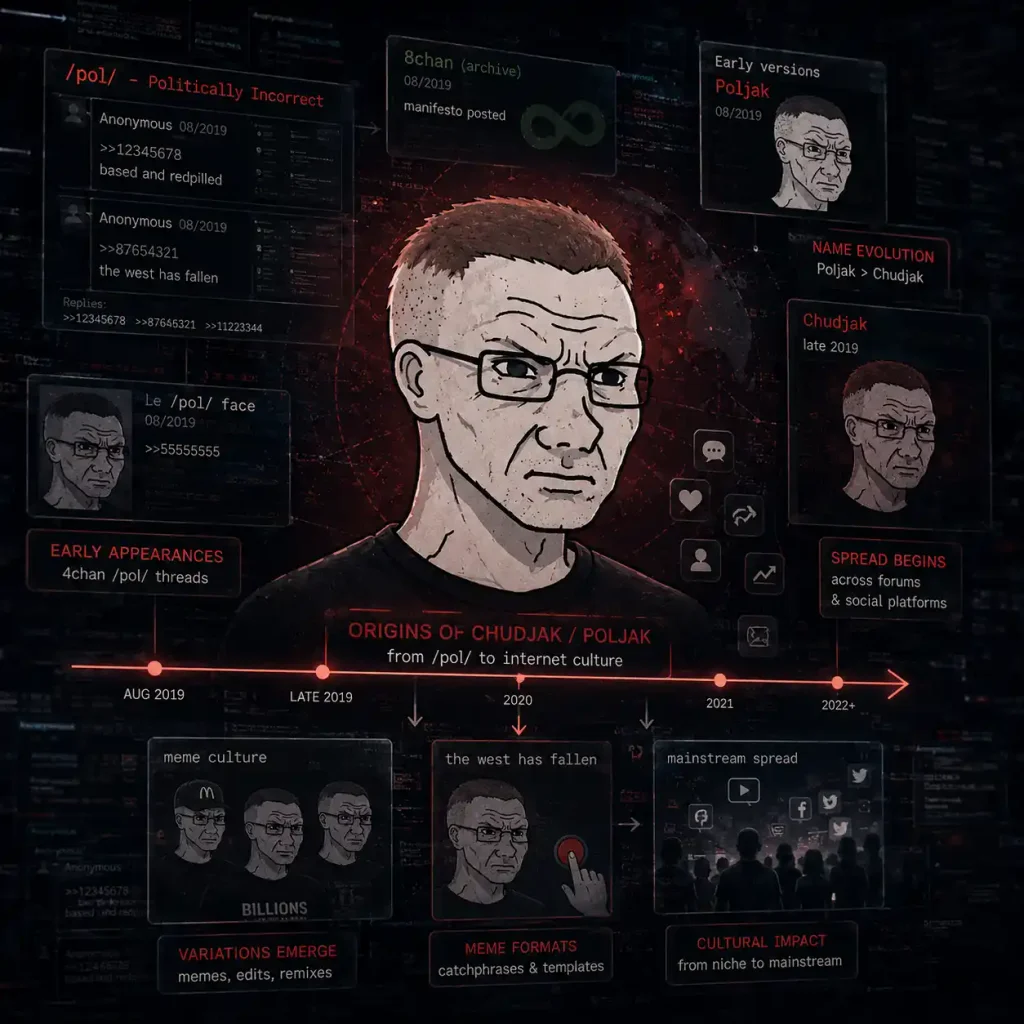
The origins of Chudjak are directly connected to the August 3, 2019 mass shooting at a Walmart in El Paso, Texas.
The perpetrator had posted a manifesto online before the attack that contained anti-immigrant and white-nationalist ideas. The shooting targeted a community with a large Latino population and resulted in 23 deaths and 21 injuries.
The attack was investigated as a hate crime, and the perpetrator later pleaded guilty to federal charges. He was ultimately sentenced to 90 consecutive life sentences.
These events are important for understanding Chudjak because the character’s appearance was created to evoke the perpetrator. The meme therefore developed within a political and online environment already connected to extremist communities.
Rather than representing a generic angry internet user, the original character was intended to symbolize a specific type of extremist personality.
Chudjak’s Early Appearance on 4chan
Chudjak began appearing online shortly after the El Paso shooting. Some of the earliest known examples appeared on 4chan, particularly around the site’s political discussion communities.
Early versions were sometimes referred to as the “le /pol/ face.” The name referenced /pol/, 4chan’s politics-focused board, which has historically been associated with controversial political discussions and far-right communities.
At the time, the character was more commonly known as Poljak. The name connected the meme directly with /pol/ and the people who participated in discussions there.
Although the El Paso perpetrator posted his manifesto on 8chan rather than 4chan, the two online environments had overlapping users and cultural influences. Some users who participated in extremist communities had moved between different anonymous imageboards.
This helped create the cultural environment in which the character became recognizable.
From Poljak to Chudjak
As the character spread beyond its original 4chan environment, the name Chudjak became increasingly common.
The change was significant because “Chud” had already developed into an internet insult used to describe people considered obnoxious, reactionary, or politically extreme.
The exact history of the word “chud” is older than the meme itself. It had been used online as a derogatory term well before Chudjak appeared. One commonly cited association is the 1984 horror movie C.H.U.D., whose title stands for “Cannibalistic Humanoid Underground Dwellers.”
Over the years, however, “chud” developed broader internet meanings. It could refer to someone perceived as unpleasant or socially repulsive, and later became increasingly connected with political insults.
The addition of “jak” followed the naming pattern of other Wojak characters. As a result, Chudjak became the name most people recognize today.
Why Chudjak Became a Political Meme
Chudjak’s appearance made it particularly useful for political memes.
Wojak characters are often used to represent exaggerated personalities, opinions, or social stereotypes. Chudjak filled a similar role but was frequently used to mock people associated with extreme political beliefs.
Instead of simply depicting an angry person, the character could be placed into different situations to parody someone supposedly reacting irrationally to modern culture, politics, or social changes.
This allowed Chudjak to become part of a larger ecosystem of political memes.
However, the character’s original association with the El Paso shooter remained difficult to separate from its later uses. Even when users employed Chudjak for general political humor, people familiar with the meme’s history could still recognize the visual reference.
Quandale Dingle: Origin, Biography, Powers & Meme Explained
Chudjak and “The West Has Fallen”
One of the meme formats associated with Chudjak is the recurring internet joke surrounding the phrase “The West has fallen.”
The broader meme format exaggerates reactions to relatively ordinary cultural or political developments. Someone sees a change they dislike and responds as though civilization itself is collapsing.
Chudjak became a useful visual representation for this type of exaggerated reaction.
In different versions of the meme, the character may appear alongside dramatic statements about society, politics, technology, entertainment, food, or cultural trends. The humor comes from portraying an extreme reaction to something comparatively mundane.
This helped move Chudjak beyond its original political context and into broader meme culture.
Chudjak Meme Variations
As with many Wojak characters, Chudjak has appeared in numerous variations.
The character may be shown wearing different clothing, interacting with other meme characters, or placed into fictional situations. Some versions exaggerate the character’s angry expression, while others use him as a generic representation of an overly reactionary internet user.
One recurring style combines Chudjak with humorous slogans or deliberately exaggerated statements.
For example, memes may portray the character as reacting dramatically to a fast-food restaurant, a cultural trend, a political event, or a change in everyday life.
These variations demonstrate how meme characters can gradually become detached from their original context. A character that begins with a very specific meaning can eventually become a broader visual shorthand.
The Creation of GigaChud
Another important development in Chudjak’s history was the appearance of GigaChud.
GigaChud emerged from attempts within some /pol/ communities to reinterpret or reclaim the character. The concept combined elements of Chudjak with the visual language of GigaChad, another popular internet meme character.
GigaChad represents an exaggerated version of masculine confidence. The character is typically portrayed with an extremely muscular physique, pronounced jawline, and highly stylized appearance.
By combining Chudjak’s recognizable face with GigaChad’s exaggerated masculinity, GigaChud became a new meme format.
The contrast was part of the joke. Instead of portraying Chudjak as an angry or unpleasant internet user, the GigaChud version presented an exaggerated image of strength and confidence.
How Chudjak Spread Beyond 4chan
The popularity of Chudjak was not limited to 4chan.
Like many internet memes, the character gradually moved through different online communities. Meme pages, social media platforms, forums, and image-sharing communities helped spread variations of the character.
As the meme traveled, its meaning became less consistent.
Some users understood the original connection to the El Paso shooter, while others encountered Chudjak simply as another Wojak character. This is common with internet memes: the original creator’s intention can become less important as thousands of users create their own versions.
The character’s recognizable design made it easy to remix, edit, and combine with other popular memes.
Why Chudjak Remains Controversial
The biggest reason Chudjak remains controversial is its connection to a real act of mass violence.
Many memes are based on fictional characters, celebrities, or harmless situations. Chudjak is different because its original visual reference was connected to a real perpetrator and a real tragedy.
That history gives the character a meaning that cannot always be separated from its later uses.
At the same time, not every person who uses or encounters a Chudjak meme necessarily supports extremist ideology. Internet users may encounter the character in a purely satirical context without knowing its origins.
This distinction is important when analyzing online meme culture. A meme can develop multiple meanings as it moves between communities, even when its original purpose was very specific.
Chudjak and the Evolution of Internet Memes
Chudjak provides an interesting example of how internet culture changes over time.
A character can begin in a small online community, gain a specific political meaning, and eventually become recognizable to a much larger audience. Along the way, users can modify its appearance, change its meaning, combine it with other memes, or use it ironically.
This process is one of the defining features of meme culture.
Wojak characters are particularly suited to this evolution because their simple designs make them easy to edit. New expressions, hairstyles, clothing, captions, and character combinations can create entirely new versions without changing the basic format.
Chudjak followed this same pattern, although its controversial origin distinguishes it from many other Wojak variations.
The Difference Between Chudjak and Other Wojaks
Wojak is a broad meme format containing hundreds of variations. Characters can represent emotions, social stereotypes, political identities, or fictional personalities.
Chudjak stands out because its appearance is tied to a specific real-world individual and event.
Other Wojak characters may symbolize loneliness, confidence, frustration, success, or online behavior. Chudjak, by comparison, became associated with a particular type of political extremism and aggressive internet culture.
This makes the character more historically significant—and more controversial—than many ordinary Wojak variations.
Final Thoughts
The Chudjak meme has one of the darker histories in modern internet meme culture. Emerging in the aftermath of the 2019 El Paso shooting, the character was designed around the appearance of the perpetrator and initially circulated within political communities on 4chan.
It later became known as Chudjak, spreading into broader meme culture and gaining additional meanings. Political parody, exaggerated reactions, “The West has fallen” jokes, and variations such as GigaChud all contributed to its evolution.
Today, Chudjak demonstrates how quickly internet symbols can change. A meme created for one specific purpose can become a widely recognized template with multiple interpretations. Yet its original connection to a real act of violence remains an important part of its history.
Understanding where Chudjak came from provides a useful reminder that internet memes are not always created in harmless environments. Behind a simple cartoon face can be a complicated story involving online communities, political movements, satire, and real-world events.