Top SEO Strategies to Scale Your Business Growth
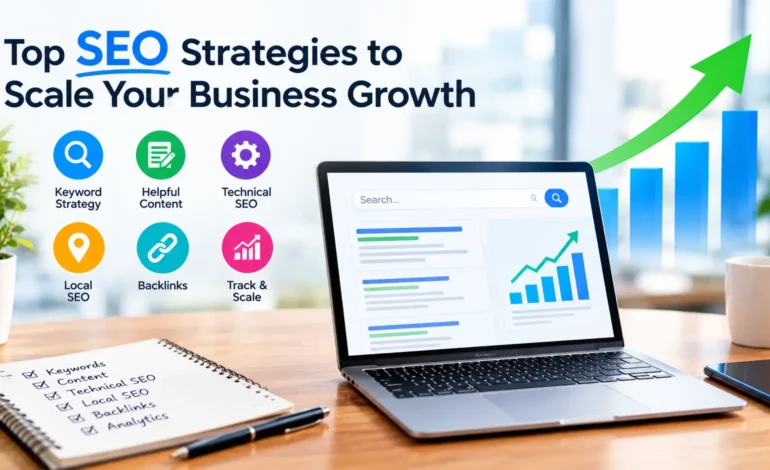
The top SEO strategies to scale business growth are simple to name. Target keywords by buyer intent and publish helpful, answer-first content. Fix technical issues like speed and mobile usability. Build strong local visibility and earn quality backlinks. Then track results and double down on pages that bring revenue.
Paid ads stop working the moment you stop paying. Organic search keeps sending visitors long after a page goes live. That is why smart businesses treat SEO as a growth engine, not a side task.
This guide covers the SEO strategies that actually move revenue in 2026. Each one is practical, measurable, and built to scale with your business.
Why SEO Is the Most Scalable Growth Channel
Most marketing channels get more expensive as you try to grow them. SEO works the other way, because each ranking page keeps earning traffic.
Every ranking page works like a salesperson that never takes a day off. Over time, these pages compound into a steady source of qualified leads.
Search traffic also comes from people already looking for a solution. Those visitors convert better than cold audiences from social feeds.
Today, search also includes AI Overviews, ChatGPT, and Perplexity. Clear, well-structured content helps your brand appear in those answers too.
Build a Keyword Strategy Around Search Intent
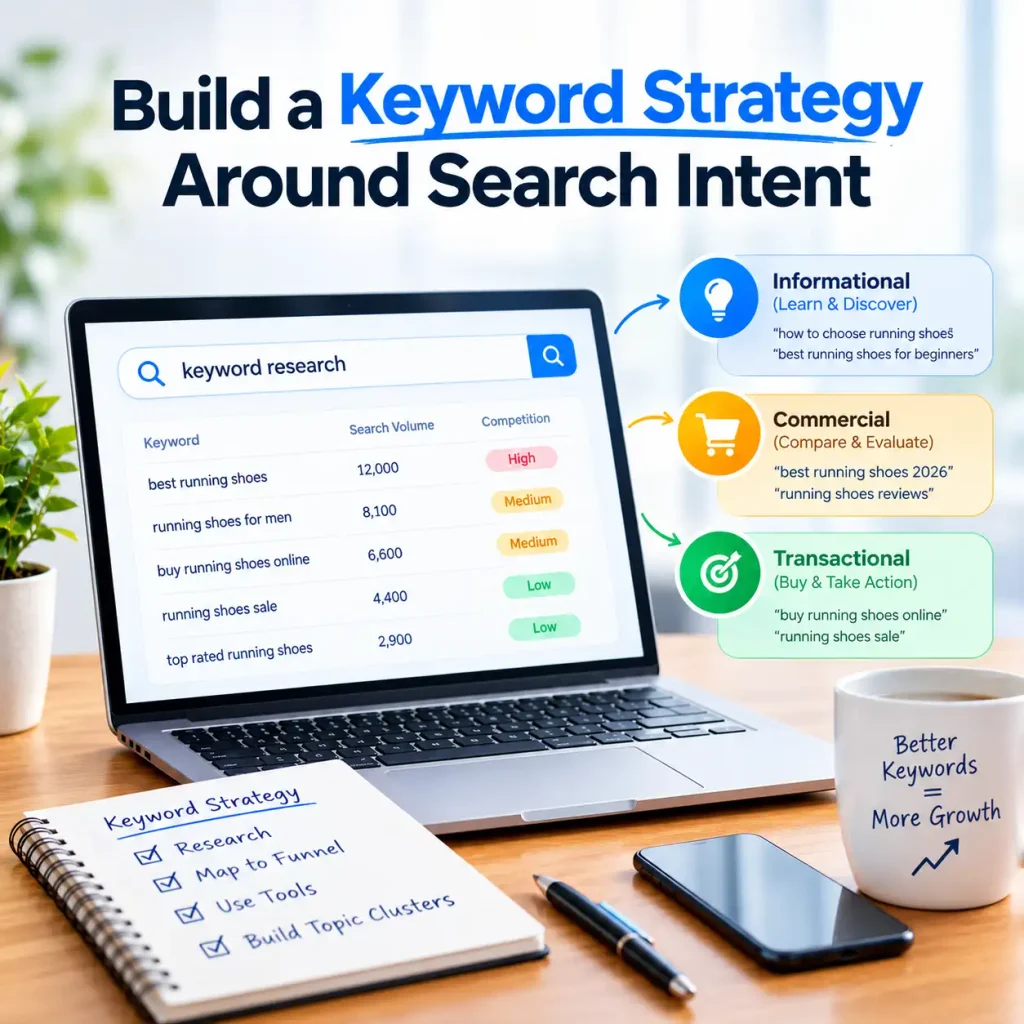
Strong SEO strategies always start with the right keywords. Ranking for the wrong terms can waste months of effort and budget.
Map Keywords to Each Stage of the Funnel
Group your keywords by intent: informational, commercial, and transactional. A blog post answers questions, while a service page closes the sale.
Tools like Ahrefs, Semrush, or Google Keyword Planner reveal search volume and competition. Prioritize terms with clear buying intent and realistic difficulty.
Use Google Search Console to find queries that already bring impressions. Those are your quickest wins for new or improved pages.
Organize Content Into Topic Clusters
A topic cluster links one pillar page to several focused supporting articles. This structure shows search engines that your site covers a subject deeply.
Keep each page focused on one or two primary keywords. Use related entity terms naturally instead of repeating the same phrase.
Create Helpful Content That Search Engines and AI Trust
Content is still the core of all successful SEO strategies. Google’s guidance on creating helpful, people-first content makes this point very clearly.
Lead With Direct Answers
Open each section with a short, direct answer of 40 to 60 words. AI tools and featured snippets often pull exactly this kind of block.
Then expand with examples, steps, and supporting detail. Short paragraphs and clear subheadings make the page easy to scan.
Use question-style subheadings that mirror how people actually search. This format helps voice assistants and AI chatbots understand your content.
Publishing at scale is hard without a reliable writing team. A professional content writing service keeps quality consistent as output grows.
Show Real Experience and Expertise
Search engines look for E-E-A-T signals: experience, expertise, authoritativeness, and trust. Add author bios, original data, case studies, and real customer examples.
Generic content that repeats competitors rarely holds its rankings for long. First-hand insight is what makes a page worth citing.
Refresh Content Every 30 to 90 Days
Rankings slowly slip when the information on a page goes stale. Review key pages every one to three months and update facts, examples, and dates.
Prioritize pages that sit in positions 5 to 15. Small improvements there often deliver the fastest traffic gains.
Fix Your Technical SEO Foundations
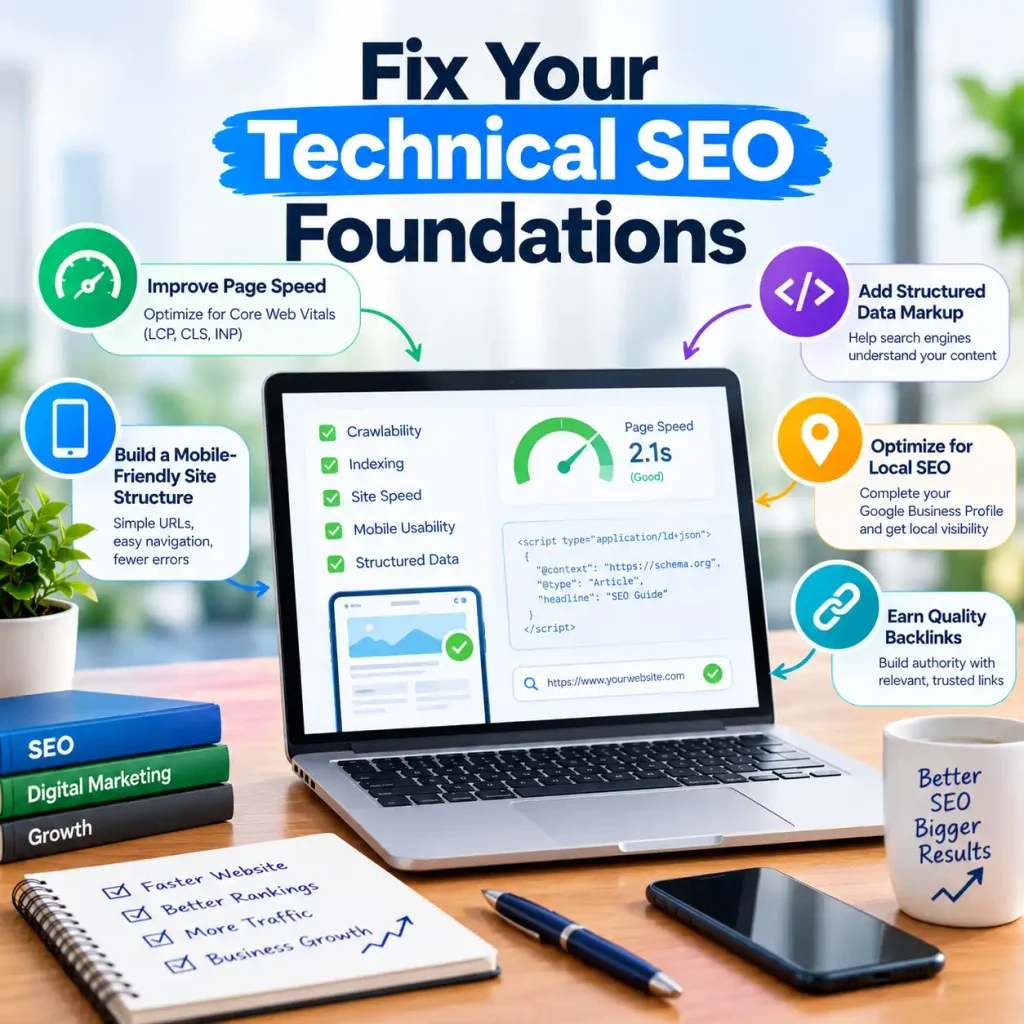
Great content cannot rank if search engines struggle to crawl or load it. Technical SEO removes these hidden barriers to growth.
Improve Page Speed and Core Web Vitals
Aim for pages that load in under 2.5 seconds on mobile. Google measures page experience through Core Web Vitals: LCP, CLS, and INP.
Target an LCP under 2.5 seconds, CLS under 0.1, and INP under 200 milliseconds. Compress images, use caching, and choose reliable hosting.
Build a Clean, Mobile-Friendly Site Structure
Google indexes the mobile version of your site first. Every page should be easy to use on a small screen.
Keep URLs short and descriptive, and link related pages together. Common website design mistakes like cluttered layouts quietly hurt both rankings and conversions.
Fix broken links and redirect chains as soon as they appear. Submit an updated XML sitemap through Google Search Console after major changes.
Add Structured Data Markup
Schema markup helps search engines understand what your page is about. Use Article, FAQPage, LocalBusiness, or Product schema where it fits.
Keep it to one to three schema types per page. Test your markup before publishing to catch errors early.
Strengthen Local SEO and Domain Authority
Trust signals from outside your website decide who wins competitive keywords. Local visibility and quality backlinks are the two biggest levers here.
Optimize Your Google Business Profile
For service businesses, the map pack often drives more calls than organic results. Complete every field in your Google Business Profile with accurate details.
Add real photos, post updates weekly, and reply to every review. Keep your name, address, and phone number consistent across all directories.
Earn High-Quality Backlinks
One link from a respected industry site beats dozens of spammy directory links. Focus on relevance and authority, not raw link count.
Publish original research, guest posts, and expert commentary that others want to cite. Digital PR and partnerships can also open strong link opportunities.
Measure Results and Scale What Works
The best SEO strategies grow by doubling down on what the data proves. Track rankings, organic traffic, conversions, and revenue in Google Analytics 4.
Watch engagement closely and aim to keep bounce rates under 50 percent. High bounce rates usually signal a mismatch between intent and content.
Review your data monthly and set clear quarterly goals. Cut or merge pages that bring no traffic and no conversions.
Once a page converts well, build more content around that topic. Many brands hire professional SEO services to scale faster without guesswork.
Frequently Asked Questions
How long does SEO take to show results?
Most businesses see early movement within three to six months. Competitive keywords and new domains can take six to twelve months.
What is the best SEO strategy for small businesses?
Local SEO and intent-focused content usually deliver the fastest returns. Start with your Google Business Profile and core service pages.
Is SEO still worth it with AI search tools?
Yes, because AI tools pull answers from well-optimized, trustworthy web pages. Strong SEO increases the chance your brand gets cited in AI answers.
How often should I update my SEO content?
Review your most important pages every 30 to 90 days. Update outdated facts, add new examples, and improve weak sections.
Final Thoughts
Scaling with SEO is not about quick tricks or chasing every algorithm update. It is about consistent, focused work on the right priorities.
Choose keywords with clear intent and publish genuinely helpful content. Fix technical issues, build authority, and measure everything that matters.
Apply these SEO strategies step by step and stay patient. Organic search can then become your most reliable channel for business growth.