Coomer Meme: Origin, Meaning, Evolution, and Internet Culture

The Coomer meme is one of the most recognizable characters to emerge from the modern Wojak meme ecosystem. Originally created as an exaggerated parody of compulsive adult-content consumption and poor impulse control, the Coomer quickly became much more than a simple internet joke. Over time, it evolved into a symbol used to discuss digital addiction, excessive screen time, online culture, self-improvement, and the darker side of constant digital stimulation.
Like many internet memes, the meaning of Coomer has changed depending on where and how it is used. In some communities, it remains a humorous Wojak character. In others, it represents unhealthy digital habits or a warning about losing control over one’s attention. The meme has also appeared in political and ideological discussions, making its cultural history more complicated than its original appearance suggests.
What Is the Coomer Meme?

Coomer is a fictional Wojak-style character portrayed as an extremely unkempt and exhausted-looking person. The character is generally associated with compulsive adult-content consumption, excessive masturbation, sleep deprivation, isolation, and an unhealthy dependence on digital entertainment.
The appearance is intentionally exaggerated for comedic effect. Typical versions show a character with a messy beard, tired or bloodshot eyes, an unhealthy appearance, and an exaggerated physical imbalance. These features are not intended to represent a realistic medical condition. Instead, they visually communicate the meme’s central joke: a person whose digital habits have supposedly become so excessive that they have taken over their entire life.
The word itself comes from internet slang and was combined with the “-er” suffix to create the name “Coomer.” Its construction follows the naming style of other Wojak-related characters, including Boomer and Zoomer.
The Origin of the Coomer Meme

The earliest known version of the Coomer character appeared on 4chan in December 2018. An anonymous user posted an unkempt-looking Wojak character on the site’s fitness board. At that point, the image did not immediately become a major meme.
Its popularity began to increase several months later. In May 2019, an expanded version of the character appeared on another 4chan board with captions portraying an exaggerated individual unable to control his impulses. The combination of the unusual artwork and absurd descriptions helped establish the basic personality of the Coomer character.
Rather than depicting a realistic individual, the meme relied on extreme exaggeration. The character represented a fictional stereotype built around excessive online consumption, compulsive behavior, and a lack of self-control.
This style of humor was common within anonymous internet communities, where users frequently created exaggerated characters to represent particular behaviors or subcultures.
The Connection to the Wojak Meme Family

To understand Coomer, it helps to understand Wojak, a simple line-drawn character that became a foundation for countless internet memes.
Wojak characters are often modified to represent emotions, personalities, lifestyles, generations, or social stereotypes. Different variations have included Boomer, Doomer, Zoomer, NPC, and many other characters.
Coomer fits naturally into this ecosystem because the character follows the same basic concept: a recognizable visual identity representing a particular stereotype.
However, Coomer stands apart because its defining characteristics focus heavily on compulsive digital consumption and exaggerated internet habits. The character therefore became useful as a visual shorthand for discussions about pornography, distraction, isolation, and online dependency.
How the Coomer Meme Spread

Between May and July 2019, Coomer images began appearing across several 4chan communities. The character was particularly common in discussions involving gaming, fitness, entertainment, and other subjects where users could easily create jokes about excessive online behavior.
A major increase in popularity occurred during August 2019. At the same time, related memes such as Cumbrain were becoming popular. These memes were frequently used to criticize people who appeared excessively dependent on adult content or other forms of instant gratification.
The Coomer character was also used as a reaction image. Users would post exaggerated versions of the character in response to attractive fictional characters, provocative images, or discussions about internet habits.
Audio recordings and parody performances further contributed to the meme’s spread. Eventually, the character moved beyond anonymous message boards and began appearing on platforms such as Twitter, Instagram, iFunny, Reddit, and other social networks.
Coomer and No Nut November
One of the most important moments in the meme’s early mainstream visibility came through its connection with No Nut November, an online challenge centered around abstaining from sexual activity for the month of November.
In October 2019, a Twitter user proposed the idea of a Coomer Pledge. Participants were encouraged to use the Coomer image as their profile picture if they failed the November challenge.
The idea quickly attracted attention and was reposted across multiple social media platforms. Meme accounts on Instagram and iFunny helped spread the concept, turning the Coomer image into a recognizable symbol associated with the challenge.
This period demonstrated how internet memes can move rapidly between unrelated communities. A character that originally appeared on anonymous message boards was now being used as a recognizable reference across mainstream social media.
The Rolling Stone Controversy
The Coomer meme also became part of a broader discussion about internet culture and anti-pornography communities.
In November 2019, Rolling Stone published an article discussing No Nut November and the Coomer meme. The article examined connections between online abstinence communities and political movements, including parts of the far right.
The article generated significant discussion online. Some users criticized the interpretation of the meme, while others argued that the Coomer character had indeed been adopted by communities with broader ideological agendas.
This controversy highlighted an important characteristic of internet memes: their meaning is rarely controlled by their original creators. Once an image becomes public, different communities can reinterpret it for entirely different purposes.
Coomer as a Symbol of Digital Addiction
Although Coomer began primarily as an internet joke, its broader interpretation eventually became connected to concerns about digital addiction and compulsive online behavior.
The character is often portrayed as someone trapped inside a repetitive cycle of instant gratification. Instead of focusing on work, relationships, exercise, education, or personal goals, the fictional Coomer continually chooses short-term digital entertainment.
This interpretation is not limited to adult content. The broader concept can apply to excessive gaming, endless scrolling, constant notifications, short-form videos, and other forms of high-frequency digital stimulation.
The modern internet makes entertainment available almost instantly. A person can move from one video, post, game, or website to another within seconds. This convenience can make it difficult to maintain concentration on activities that require patience and sustained effort.
For this reason, the Coomer has increasingly been interpreted as a caricature of poor digital self-control.
The Psychology Behind the Meme
The Coomer meme is sometimes described using the concept of a “dopamine loop.” While popular discussions often oversimplify dopamine, the underlying idea is that repeated exposure to rewarding or highly stimulating activities can reinforce certain behavioral patterns.
Digital platforms are particularly effective at encouraging repeated engagement because they provide constant novelty. Notifications, recommendations, new videos, games, social interactions, and other content can create a continuous stream of potential rewards.
The Coomer character exaggerates what this pattern might look like when taken to an extreme.
In meme form, the character represents someone who repeatedly chooses immediate stimulation over long-term goals. The joke therefore works on two levels: it is visually absurd, but it also reflects a genuine modern concern about attention and digital habits.
The Self-Improvement Interpretation
Another important part of the Coomer meme’s evolution has been its adoption by self-improvement and digital-wellness communities.
In these communities, the character is sometimes used as a humorous warning about excessive screen time, unhealthy habits, or compulsive adult-content consumption.
Instead of simply mocking other people, users may use the Coomer image to make fun of their own behavior. This transforms the meme into a form of self-deprecating humor.
The broader message is simple: spending too much time chasing instant gratification can interfere with important goals. Whether the goal is fitness, education, career development, relationships, or personal growth, excessive digital distraction can make sustained progress more difficult.
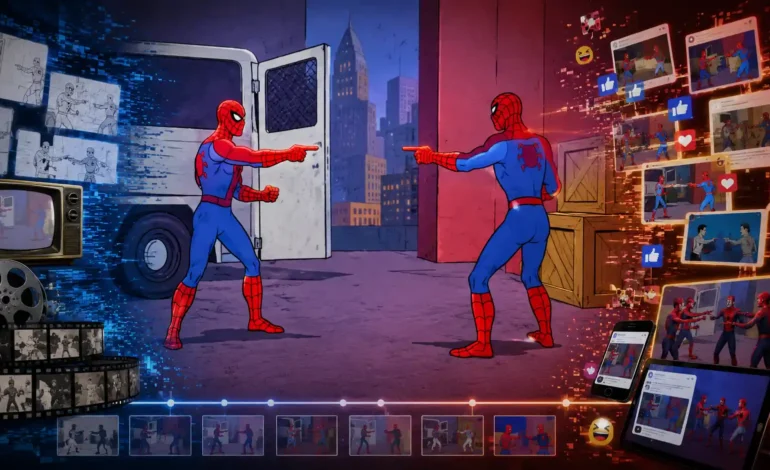
Read also: Spider-Man Pointing at Spider-Man: Origin, Meaning, and Meme History
Political and Ideological Uses
The Coomer meme has also been adopted by political and ideological communities.
Some traditionalist and far-right online groups have used the character as a symbol of what they view as cultural decline, excessive consumerism, or changing sexual norms. In these contexts, the meme can carry meanings that go far beyond its original joke.
However, not every use of the Coomer image has a political meaning. Like many memes, its interpretation depends heavily on the community, platform, and surrounding context.
This distinction is important when analyzing internet culture because the same image can simultaneously function as a joke, a reaction image, a self-improvement symbol, or a political metaphor.
The Real-Life “Coomer Man”
Another notable development was the emergence of the so-called Coomer Man.
In 2019, an attendee photographed at an adult entertainment industry event was noticed by 4chan users because his appearance was considered similar to the fictional Coomer character. His photograph was subsequently incorporated into meme edits and jokes.
The association became another example of how internet communities can transform ordinary photographs into meme templates. However, the real individual and the fictional character should be distinguished from one another. The Coomer itself is a fictional caricature, while the person used in these memes was a real individual.
Why the Coomer Meme Remains Relevant
The lasting popularity of Coomer comes from its ability to represent a broader anxiety about modern digital life.
The meme exaggerates the consequences of compulsive behavior, but its central theme is surprisingly familiar: the struggle to control attention in an environment designed to capture it.
People today have access to virtually unlimited entertainment, information, social media, and digital stimulation. While these technologies provide enormous benefits, they can also make distraction easier than ever.
The Coomer therefore works as both comedy and social commentary. Its exaggerated appearance makes it immediately recognizable, while its underlying message gives people a way to discuss difficult questions about self-control, online habits, and digital dependency.
Conclusion
The Coomer meme began as an obscure Wojak variation on 4chan in 2018 and developed into one of the internet’s most recognizable characters during 2019. Its original purpose was largely comedic, portraying an exaggerated stereotype of compulsive adult-content consumption and poor impulse control.
As the meme spread across social media, its meaning expanded. It became connected with No Nut November, digital wellness, self-improvement, political debates, and broader concerns about excessive internet use.
Ultimately, Coomer is more than an image of an exhausted Wojak. It has become a cultural shorthand for the tension between instant gratification and long-term goals. Whether viewed as an absurd internet joke, a self-improvement metaphor, or a commentary on digital culture, the meme continues to reflect one of the defining challenges of the connected age: learning how to use technology without allowing it to control our attention.