Best Telescopes for Beginners: Top Picks for Stargazing
Choosing your first telescope can be exciting, especially if you are interested in exploring the night sky. From the Moon’s craters to Saturn’s rings and Jupiter’s moons, a telescope can help you discover many interesting objects in space. However, finding the right telescope as a beginner can be challenging because there are different types, sizes, features, and price ranges to consider.
The best telescopes for beginners are not necessarily the most expensive or powerful models. A good beginner telescope should be easy to set up, simple to operate, stable, and capable of providing clear views of popular celestial objects. It should also match your budget and observing interests.
Before purchasing a telescope, it is important to understand basic features such as aperture, magnification, mount type, and portability. These factors can make a significant difference in your overall stargazing experience.
This guide explains what to look for in a beginner telescope, the different types available, what you can see through one, and which accessories can make your experience better.
What Should Beginners Look for in a Telescope?
Buying a telescope involves more than choosing a model with high magnification. Several features affect image quality, usability, and overall performance.
Aperture and Light-Gathering Ability
Aperture is one of the most important features to consider when buying a telescope. It refers to the diameter of the telescope’s main lens or mirror. A larger aperture collects more light, allowing you to see fainter objects and observe more details.
For beginners, a telescope with an aperture of around 70mm to 130mm can be a practical starting point. Smaller telescopes can provide enjoyable views of the Moon and brighter planets, while larger models can reveal more details and some deep-sky objects.
Magnification and Image Quality
Magnification determines how large an object appears through the telescope. However, higher magnification does not automatically mean better viewing quality.
A telescope’s useful magnification depends mainly on its aperture, optical quality, and atmospheric conditions. Excessive magnification can make objects appear blurry and difficult to observe.
Beginners should focus on optical quality and aperture instead of choosing a telescope based only on advertised magnification numbers.
Telescope Mount Types
The mount holds the telescope and helps you point it toward objects in the sky. A stable mount is essential for comfortable viewing.
The two common mount types are:
- Altazimuth Mount: Moves up, down, left, and right. It is simple to operate and suitable for beginners.
- Equatorial Mount: Designed to follow the movement of celestial objects using one main axis. It requires more setup and practice but can be useful for tracking objects.
A simple and stable mount is often the better choice for someone buying their first telescope.
Portability and Ease of Setup
A telescope should be convenient enough to use regularly. Large telescopes can offer better light-gathering ability, but they may be heavier and harder to transport.
If you plan to observe from different locations, consider a lightweight model that is easy to carry and assemble.
Budget and Overall Value
Beginner telescopes are available at different prices. You do not need to spend a large amount of money to start exploring the night sky.
Consider the telescope’s optical quality, mount stability, included accessories, and ease of use before making a purchase.
Best Types of Telescopes for Beginners
Understanding the different types of telescopes can help you choose the right option for your needs. Each type has its own advantages and limitations.
Refractor Telescopes
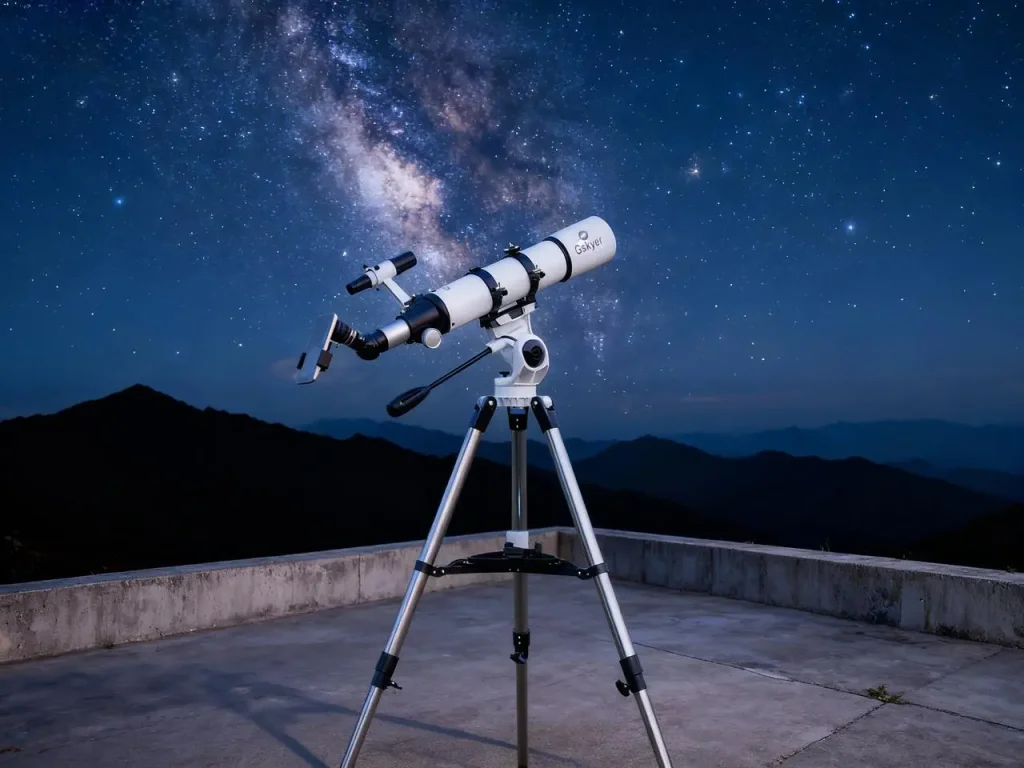
Refractor telescopes use lenses to collect and focus light. They are generally easy to use and require little maintenance, making them a popular choice for beginners.
These telescopes are particularly useful for observing the Moon, planets, and other bright objects. They often provide sharp images and are available in compact designs.
However, larger refractor telescopes can become expensive, and some affordable models may show color distortion around bright objects.
Reflector Telescopes
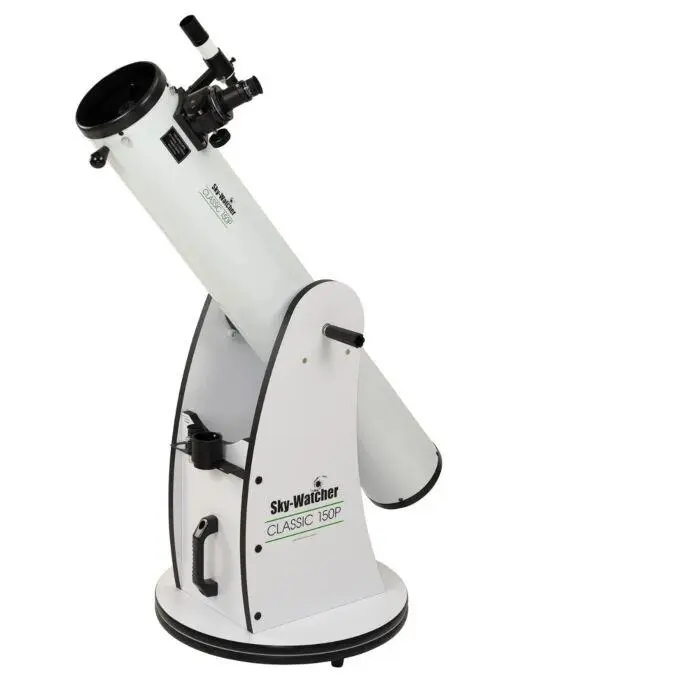
Reflector telescopes use mirrors instead of lenses to collect light. They usually offer larger apertures at a lower price than refractor models.
They are suitable for observing deep-sky objects such as galaxies, nebulae, and star clusters. A larger aperture allows more light to enter the telescope, helping you see fainter objects.
Reflector telescopes may require occasional mirror alignment, known as collimation. Their open optical tubes also need protection from dust.
Compound Telescopes
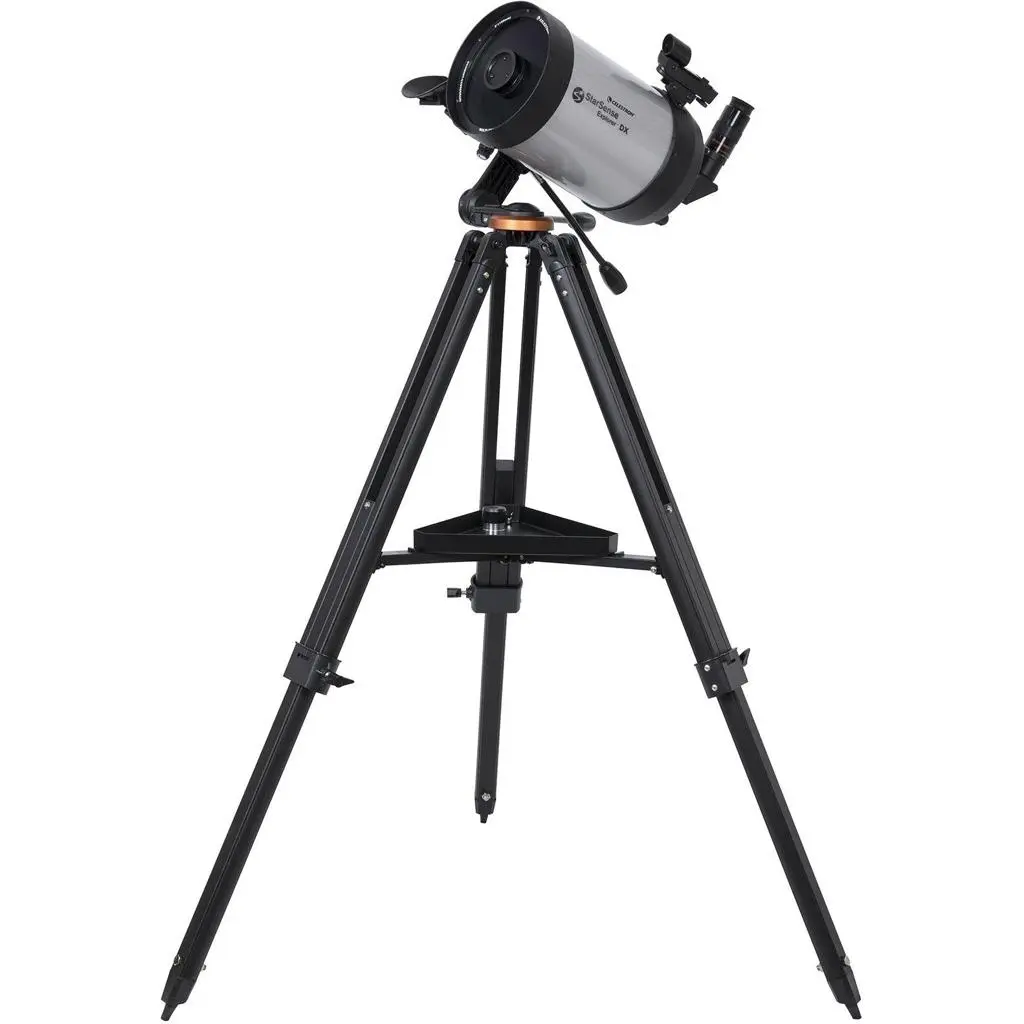
Compound telescopes combine lenses and mirrors to create a compact optical system. They offer a useful balance between portability, magnification, and viewing performance.
These telescopes can be used for observing the Moon, planets, and selected deep-sky objects. Their compact design makes them easier to transport than many larger telescopes.
However, compound telescopes can cost more than basic beginner models and may require additional setup.
Which Type Is Best for First-Time Users?
The best type depends on what you want to observe.
- Refractor: Best for beginners interested in the Moon and planets.
- Reflector: Best for people who want a larger aperture and deep-sky viewing.
- Compound: Best for users who want a compact telescope with versatile viewing options.
For most first-time users, a simple refractor or Dobsonian reflector is a practical starting point.
Best Telescopes for Beginners
Choosing a specific telescope becomes easier when you understand your budget and observing goals. The following models are worth considering for different beginner needs.
Best Overall Telescope for Beginners
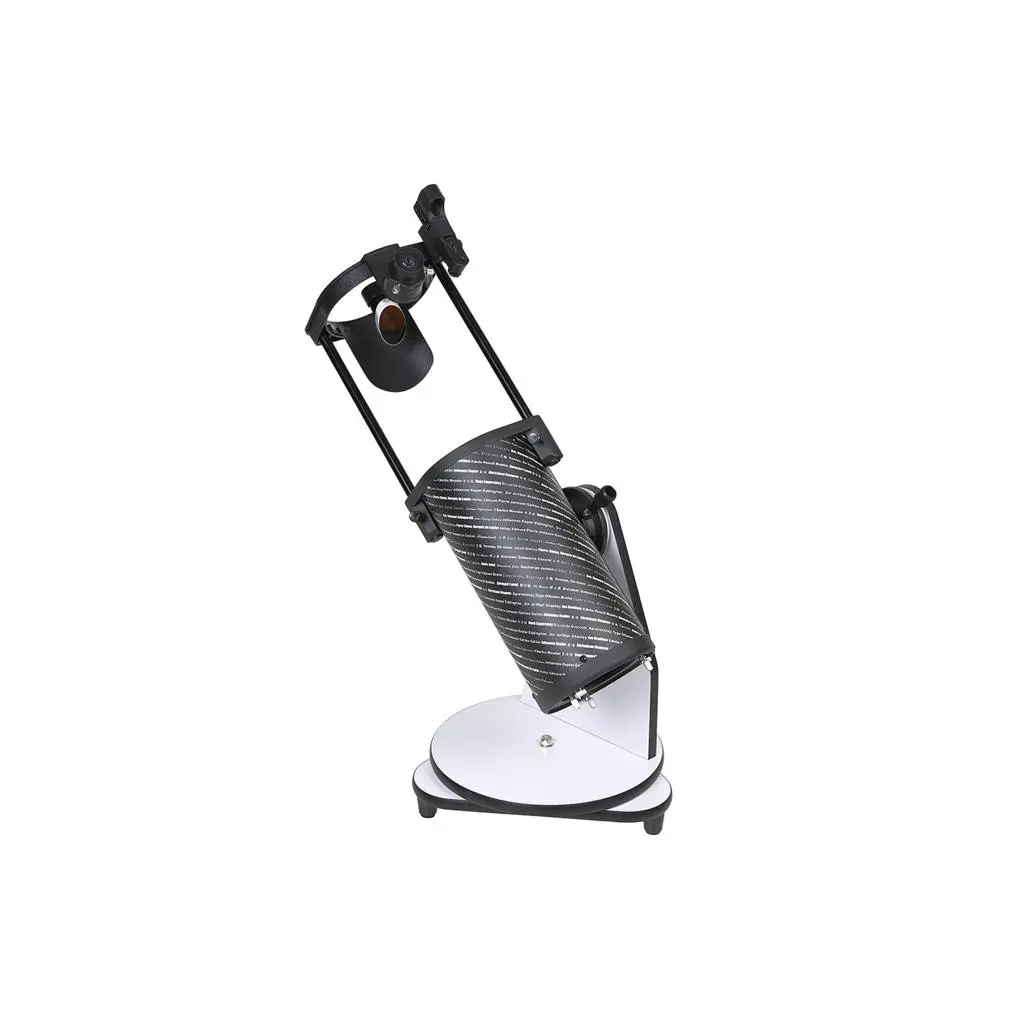
The Sky-Watcher Heritage 130P is a popular option for beginners who want a capable telescope without dealing with complicated equipment. It features a 130mm aperture and a tabletop Dobsonian mount.
Its relatively large aperture helps collect enough light to observe the Moon, planets, and several brighter deep-sky objects. Its simple design also makes pointing the telescope toward objects straightforward.
It is a good choice for beginners who want to explore different parts of the night sky.
Best Budget Telescope for Beginners
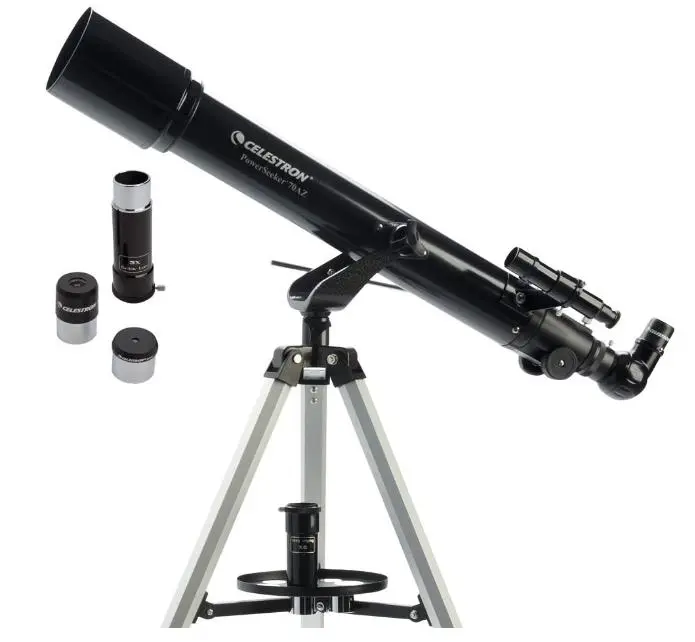
The Celestron PowerSeeker 70AZ is an entry-level refractor telescope designed for people starting astronomy on a limited budget.
Its 70mm aperture makes it suitable for observing the Moon, bright planets, and some star clusters. The altazimuth mount provides simple up-and-down and left-and-right movement.
It is a reasonable option for casual stargazing, although its lightweight mount may make high-magnification viewing less stable.
Best Telescope for Viewing Planets
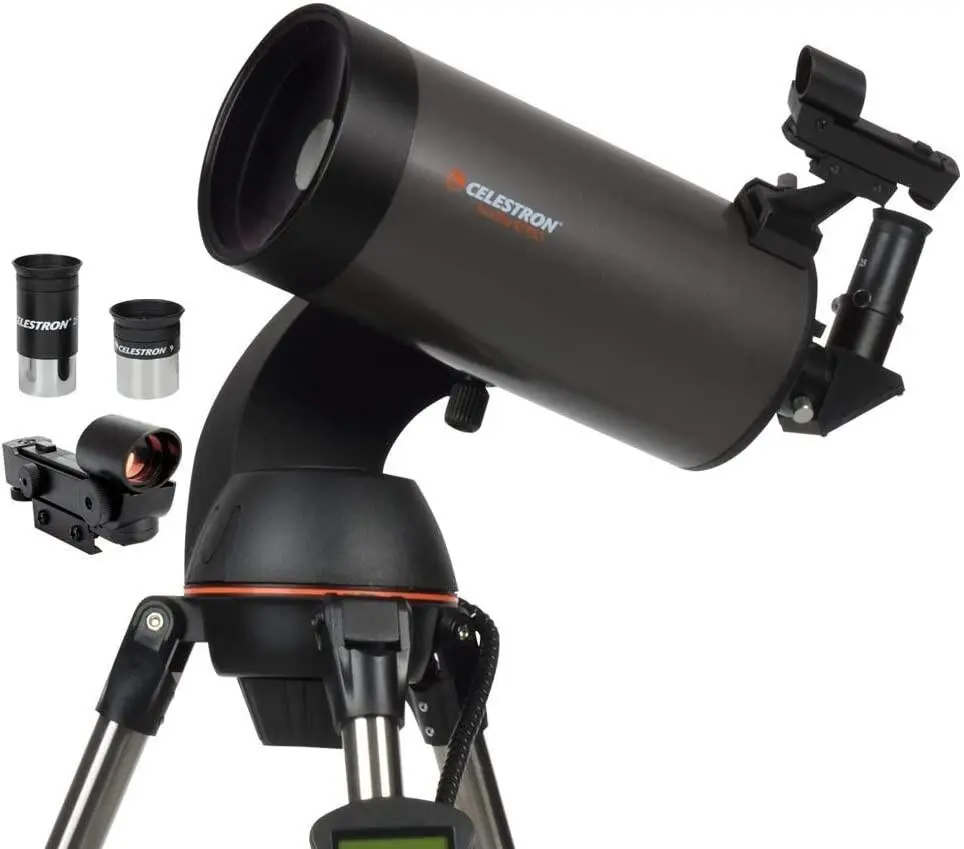
The Celestron NexStar 127SLT is a compound telescope with a 127mm aperture. Its long focal length makes it suitable for observing the Moon and planets.
It includes a computerized mount that can help locate and track celestial objects. This feature can be useful for beginners who find locating objects manually difficult.
However, computerized telescopes require proper alignment before use, and the electronic system adds to the overall cost.
Best Telescope for Deep-Sky Objects
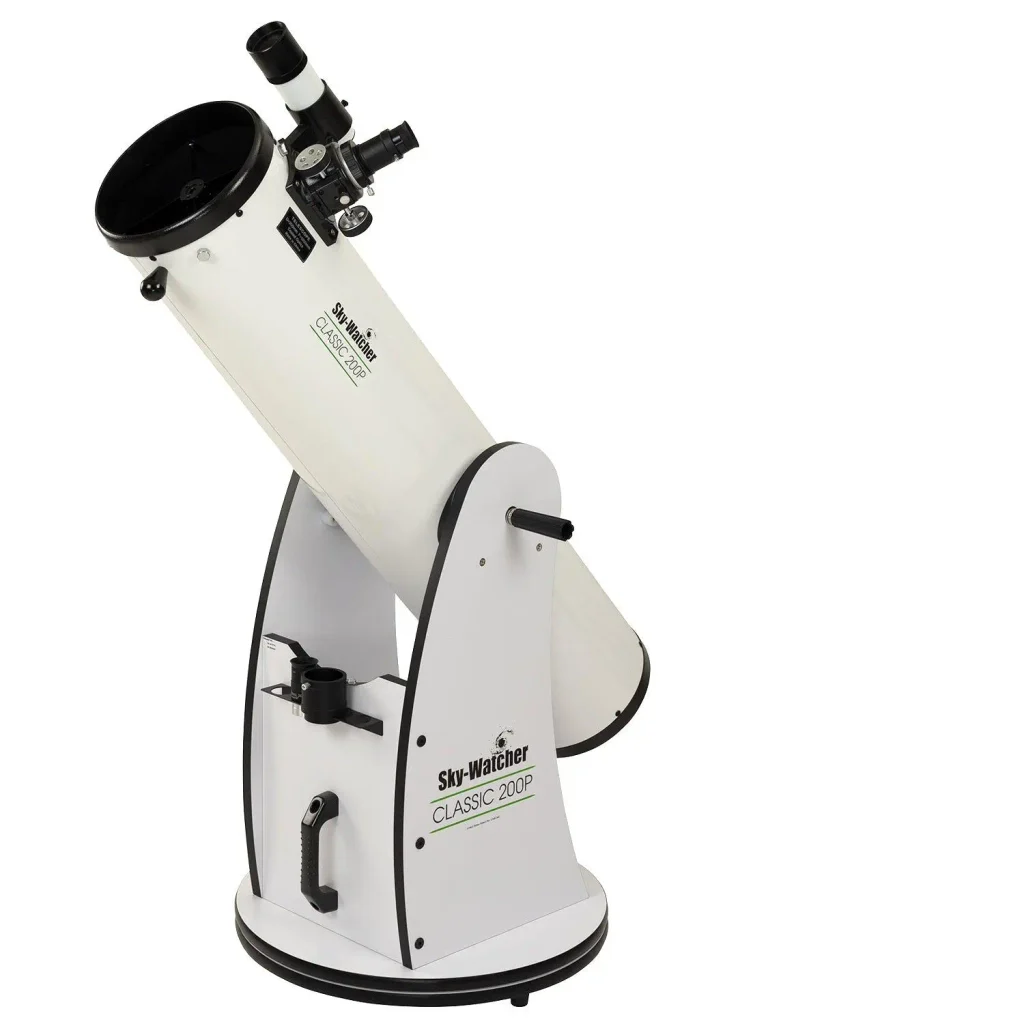
The Sky-Watcher Classic 200P Dobsonian is a reflector telescope with a 200mm aperture. Its larger mirror collects significantly more light than smaller beginner models.
This makes it suitable for observing star clusters, brighter galaxies, nebulae, and planetary details.
Although it is larger and heavier than tabletop telescopes, it can be an excellent option for beginners who have enough storage space and want to explore deep-sky astronomy.
Best Portable Telescope
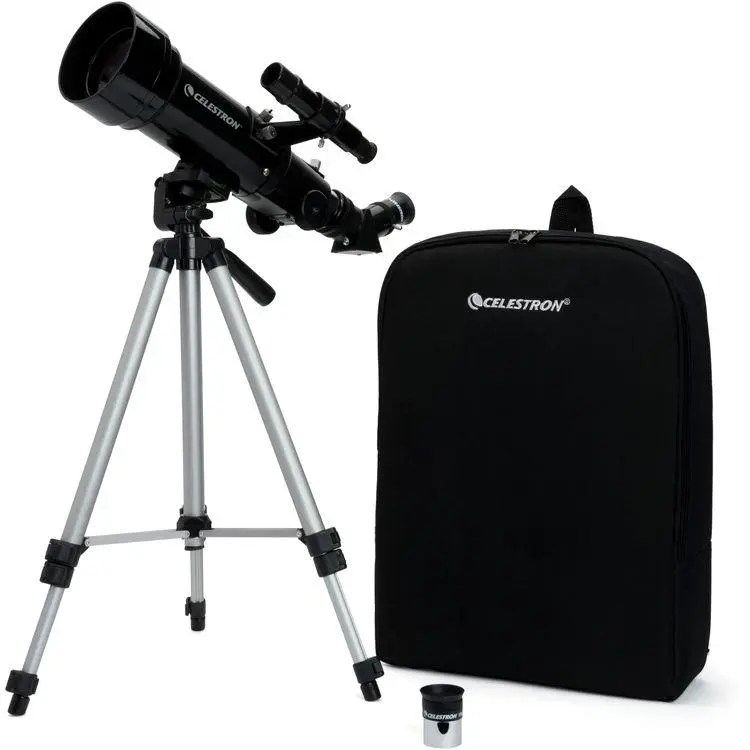
The Celestron Travel Scope 70 is designed for portability and convenient outdoor use. Its lightweight construction makes it easy to carry when travelling or visiting different stargazing locations.
Its 70mm aperture is suitable for observing the Moon and other bright objects. It can also be useful for daytime viewing of distant landscapes.
It is a practical option for beginners who prioritize portability over maximum light-gathering performance.
Best Telescope for Kids and Families
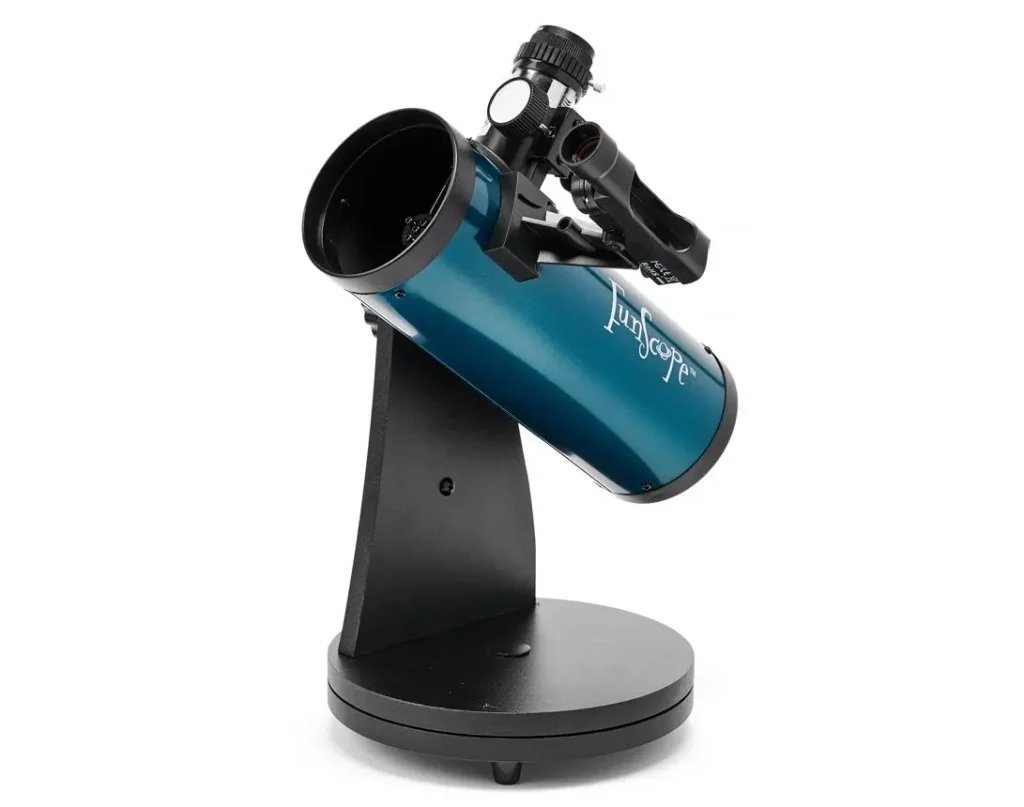
The Orion FunScope 76 is a small tabletop reflector telescope designed for simple and enjoyable stargazing.
Its compact design makes it manageable for children and families who want to explore the Moon and brighter objects together.
A stable surface is needed to support the telescope. Adult assistance can also make setup and object identification easier for younger users.
What Can You See With a Beginner Telescope?
A beginner telescope can reveal many interesting objects in the night sky. What you can observe depends on the telescope’s aperture, optical quality, viewing location, and weather conditions.
The Moon and Its Craters
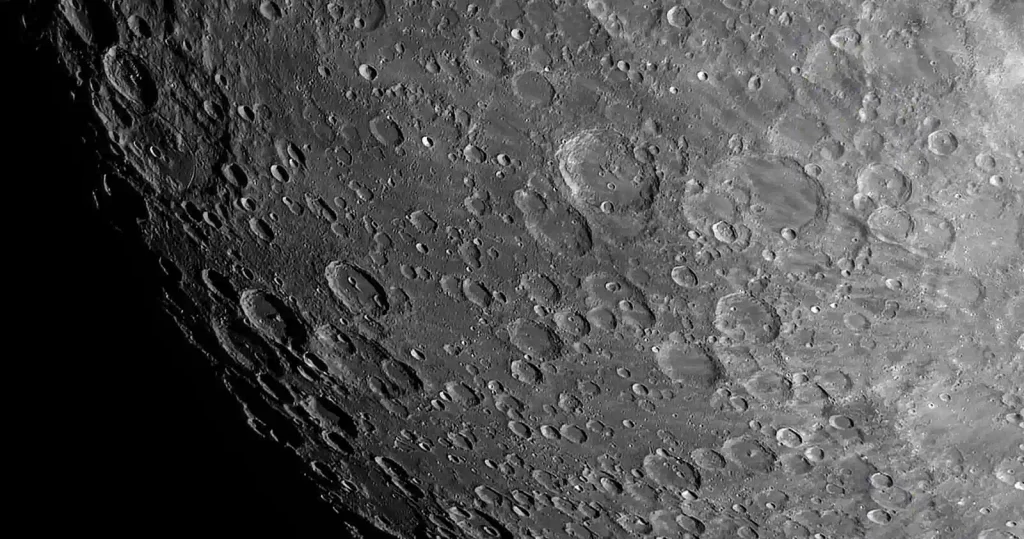
The Moon is one of the easiest and most rewarding objects to observe with a beginner telescope. You can see its craters, mountains, valleys, and other surface features.
The best time to observe the Moon is often when it is not completely full. During these phases, sunlight creates shadows along the boundary between light and dark areas, making surface details easier to see.
Jupiter and Its Moons
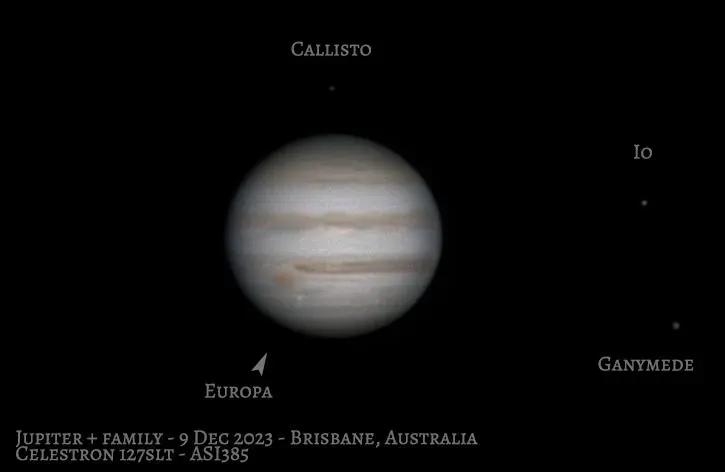
Jupiter is another excellent target for beginners. Even a small telescope can reveal its four largest moons, known as the Galilean moons.
With suitable equipment and viewing conditions, you may also see some of Jupiter’s cloud bands. Observing the planet over several nights can help you notice how its moons change positions.
Saturn and Its Rings
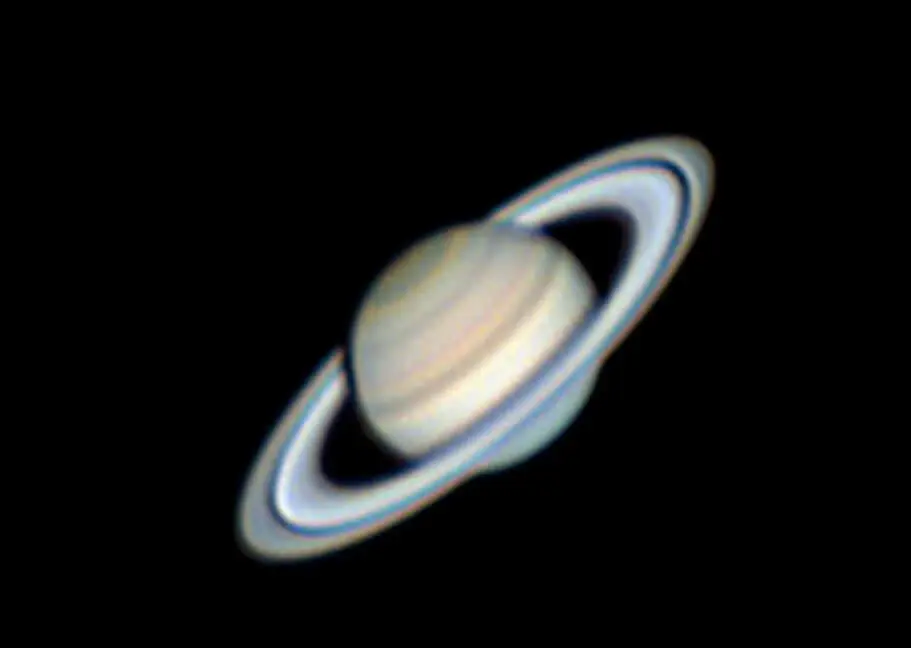
Saturn is one of the most exciting planets to observe through a telescope. Its rings can be visible even through relatively small beginner-friendly models.
A telescope with good optical quality and sufficient magnification can provide a recognizable view of the planet and its ring system.
Mars and Venus
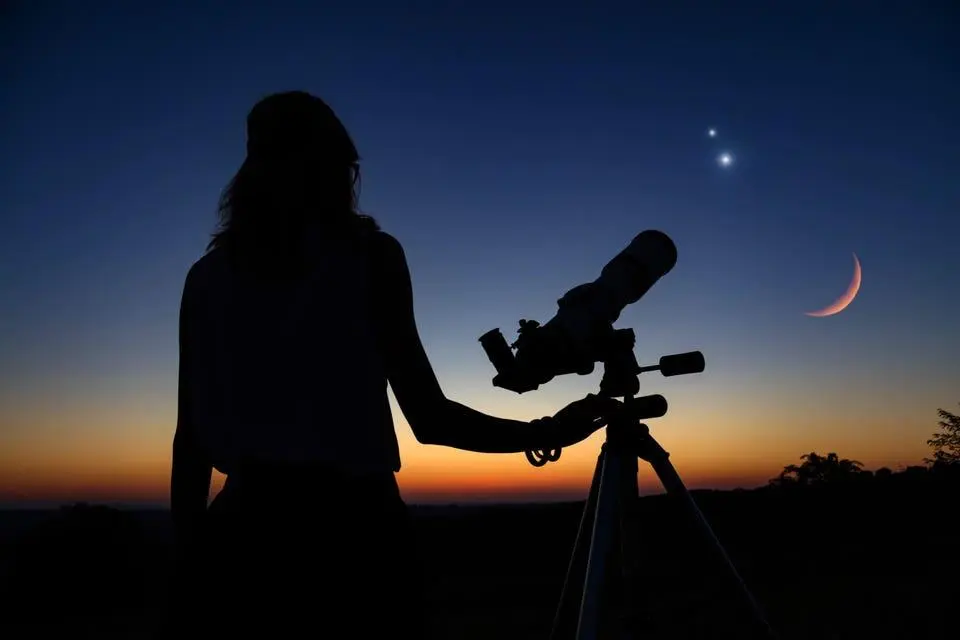
Mars and Venus are also popular targets for amateur astronomers. Venus can show different phases, similar to the Moon, while Mars may reveal a small disk and some surface features under favorable conditions.
Mars is generally easier to study when it appears closer to Earth.
Star Clusters and Bright Nebulae
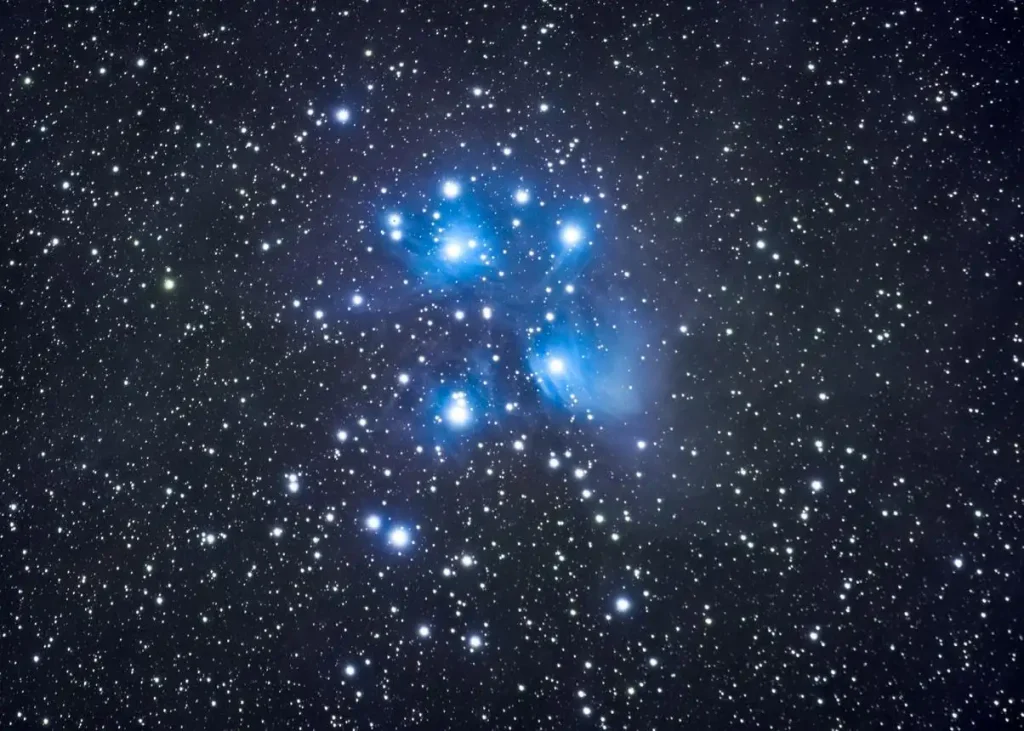
A telescope with a larger aperture can help beginners explore star clusters and brighter nebulae. Objects such as the Pleiades star cluster and Orion Nebula are popular targets.
Dark skies away from city lights can significantly improve the viewing experience, especially when observing faint deep-sky objects.
How Much Should Beginners Spend on a Telescope?
The right budget depends on your interests and how often you plan to use your telescope. Spending more can provide better optics, a larger aperture, or additional features, but an expensive model is not always necessary.
Affordable Entry-Level Options
Affordable telescopes are suitable for beginners who want to explore the Moon, bright planets, and some star clusters. Refractor models with apertures around 70mm can be a reasonable starting point.
Before purchasing, check the stability of the mount and the quality of the included eyepieces.
Mid-Range Telescopes
Mid-range telescopes often provide better light-gathering ability and more viewing opportunities. A 114mm to 150mm reflector can be a good option for people interested in both planetary and deep-sky observation.
A tabletop Dobsonian can offer particularly good value in this category.
Premium Beginner-Friendly Models
Premium beginner telescopes may include larger apertures, computerized mounts, and automatic object tracking.
These features can make finding celestial objects easier, but they also increase the price and setup requirements. Consider them if you expect to continue astronomy as a long-term hobby.
Additional Accessories to Consider
Remember that the telescope itself may not include everything you need. You may also want to budget for additional eyepieces, a carrying case, or a star chart.
Essential Telescope Accessories for Beginners
The right accessories can make your stargazing experience more comfortable and help you get better results from your telescope.
- Eyepieces: Different eyepieces provide different magnification levels and fields of view.
- Barlow Lenses: These increase the magnification of an eyepiece, although they cannot improve the telescope’s optical limits.
- Finderscopes: They help you locate objects before viewing them through the main telescope.
- Moon Filters: These reduce the Moon’s brightness and can make extended lunar observations more comfortable.
- Smartphone Adapters: They allow you to attach a phone to the eyepiece for basic astrophotography.
- Star Charts and Astronomy Apps: These help identify planets, stars, constellations, and other celestial objects.
You do not need to purchase every accessory immediately. Start with the equipment included with your telescope and add accessories as your experience grows.
Common Telescope Buying Mistakes to Avoid
Beginners sometimes purchase a telescope based on advertised features without understanding how those features affect actual performance.
Here are some common mistakes to avoid:
- Choosing High Magnification: High magnification does not guarantee clear images. Aperture and optical quality are more important.
- Buying an Unstable Mount: A shaky mount makes it difficult to focus and observe objects comfortably.
- Ignoring Setup Requirements: Complicated equipment can make the first stargazing experience frustrating.
- Expecting Professional-Level Images: Views through an eyepiece are different from professionally processed space photographs.
- Overlooking Portability: A telescope that is too heavy or difficult to assemble may not be used regularly.
Taking time to compare these features can help you choose equipment that suits your needs and experience level.
Tips for Using Your First Telescope
Learning to use a telescope takes practice. A few simple steps can help you become comfortable with your equipment.
- Choose a Dark Viewing Location: Move away from bright streetlights and buildings whenever possible.
- Start With the Moon: It is an easy target to locate and provides plenty of visible details.
- Allow Your Eyes to Adjust: Give your eyes time to become accustomed to darkness before observing faint objects.
- Learn to Focus Properly: Adjust the focus slowly until the object appears sharp and clear.
- Practice Finding Objects: Use a star chart or astronomy app to identify objects and understand their positions.
- Be Patient: Atmospheric conditions can affect image quality, so some nights provide better views than others.
Regular practice will help you understand your telescope and explore more objects in the night sky.
Frequently Asked Questions (FAQs)
What is the best telescope for a complete beginner?
The Sky-Watcher Heritage 130P is a good option for beginners who want a simple reflector telescope with a useful 130mm aperture. Refractor models such as the Celestron PowerSeeker 70AZ are also worth considering for basic observations.
How much should a beginner spend on a telescope?
Your budget depends on your observing goals. Affordable models can provide enjoyable views of the Moon and bright planets, while mid-range telescopes offer larger apertures and more viewing opportunities.
Is a refractor or reflector telescope better for beginners?
Both types can work well. Refractors are easy to maintain and suitable for observing the Moon and planets. Reflectors generally provide larger apertures for the money and are useful for viewing deep-sky objects.
Can beginners see Saturn’s rings?
Yes. Many beginner telescopes can show Saturn’s rings when the planet is visible and viewing conditions are suitable. A telescope with good optics and a stable mount will provide a better experience.
What telescope is best for viewing planets?
A refractor or Maksutov-Cassegrain telescope can be a good choice for planetary observation. Models with good optical quality, sufficient aperture, and a stable mount can reveal details on bright planets.
Are expensive telescopes worth it for beginners?
Expensive telescopes can offer larger apertures, computerized tracking, and additional features. However, beginners do not necessarily need premium equipment. A simple telescope with good optics can provide an excellent starting experience.
Can you use a telescope without experience?
Yes. Many beginner telescopes are designed for people with no previous astronomy experience. Start with easy targets such as the Moon, learn the basic controls, and gradually explore other celestial objects.
Conclusion
Choosing the right telescope is an important first step toward exploring astronomy. The best telescopes for beginners offer a balance of optical quality, aperture, stability, portability, and ease of use.
Models such as the Sky-Watcher Heritage 130P, Celestron PowerSeeker 70AZ, and Celestron NexStar 127SLT offer different features for different observing needs. Before purchasing, consider what you want to see, how much you can spend, and where you plan to use your telescope.
You do not need expensive equipment to begin stargazing. With the right telescope and regular practice, you can enjoy observing the Moon, planets, star clusters, and other fascinating objects in the night sky.
Read also: FintechZoom: Global Finance News, Markets, Crypto & Investment Insights





1 Comment
[…] also: Best Telescopes for Beginners: Top Picks for […]