iPhone vs Android: Which Is Better for You? Key Differences Explained
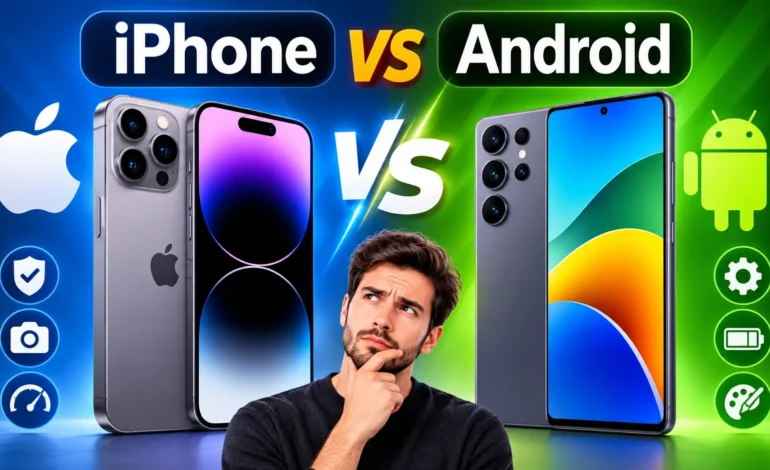
Choosing between an iPhone and an Android phone can be difficult, especially when both platforms offer powerful features, modern designs, excellent cameras, and fast performance. Apple and Android manufacturers continue to improve their smartphones, making the competition stronger every year. However, the best choice depends on your budget, personal preferences, and how you use your phone.
The iPhone is known for its simple interface, strong security, long-term software support, and smooth connection with other Apple devices. Android phones, on the other hand, offer more customization, a wider range of prices, different hardware options, and greater flexibility.
If you are comparing iPhone vs Android, understanding their main differences can help you make a better buying decision. This guide explains their operating systems, performance, cameras, battery life, security, customization, pricing, and overall user experience.
What Is the Difference Between iPhone and Android?
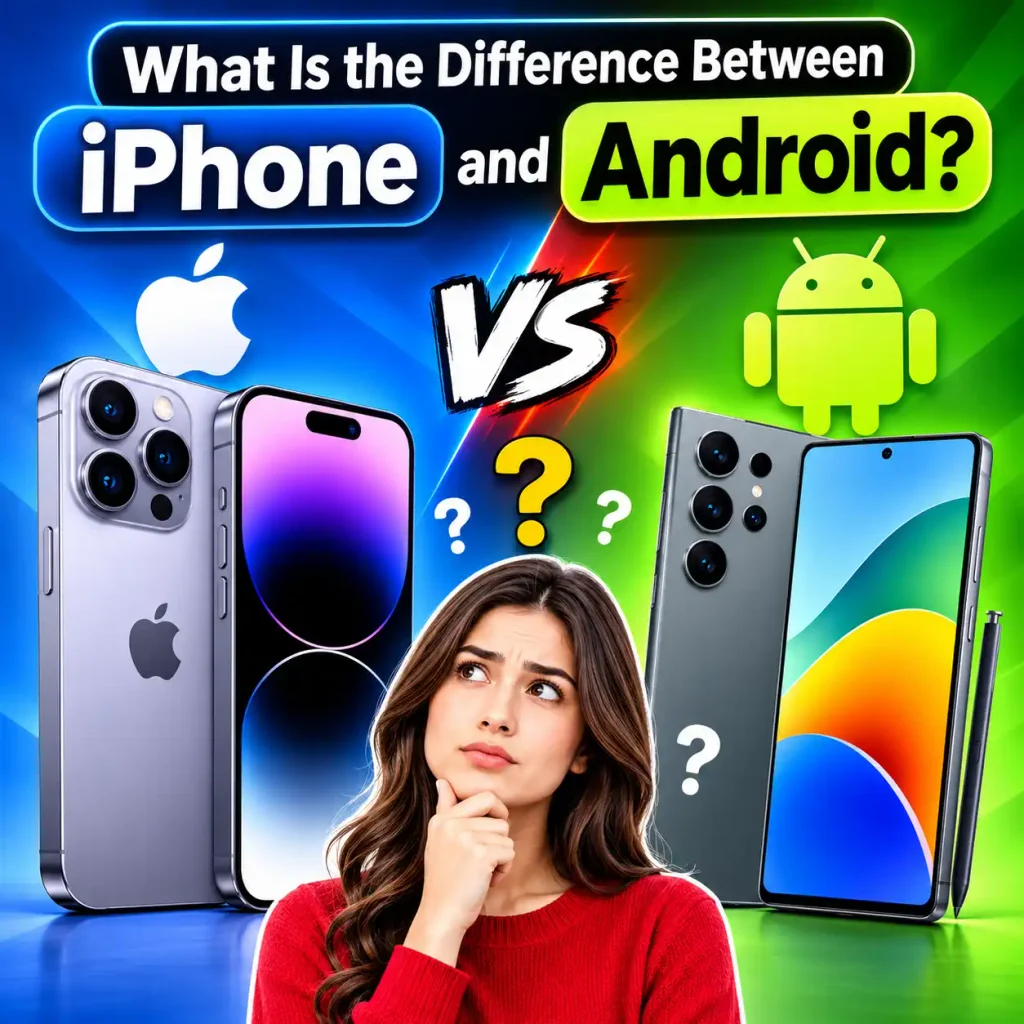
The biggest difference between iPhone and Android is their operating systems. Apple develops both the iPhone hardware and iOS software, while Android is developed by Google and used by many smartphone manufacturers.
What Is an iPhone?
An iPhone is a smartphone designed and manufactured by Apple. It runs on iOS, Apple’s mobile operating system, which provides a consistent experience across supported iPhone models.
Apple controls most aspects of the iPhone experience, including hardware design, software updates, security features, and its App Store. This integration helps Apple deliver a smooth and familiar experience.
Some important iPhone features include:
- Simple and easy-to-use interface.
- Regular iOS software updates.
- Strong privacy and security features.
- High-quality camera and video recording.
- Integration with Mac, iPad, Apple Watch, and AirPods.
- Access to Apple’s App Store and services.
iPhones are generally positioned in the mid-range and premium smartphone market, although older models can provide more affordable options.
What Is an Android Phone?
Android is a mobile operating system developed by Google. Unlike iOS, Android is available on smartphones from different manufacturers, including Samsung, Google, OnePlus, Xiaomi, and Motorola.
Each manufacturer can customize Android with its own interface, features, and applications. This gives buyers more choices when selecting a smartphone.
Important Android features include:
- Flexible home screen customization.
- Different smartphone designs and hardware options.
- Wide selection of budget and premium devices.
- Support for different app stores.
- Greater control over default applications.
- Compatibility with many third-party accessories and services.
Android is suitable for users who want more control over their smartphone experience and prefer having multiple options at different price levels.
iPhone vs Android: Key Differences at a Glance
Although both platforms perform similar everyday tasks, they offer different experiences. The following table highlights their main differences.
| Feature | iPhone | Android |
|---|---|---|
| Operating System | iOS | Android |
| Manufacturers | Apple | Multiple brands |
| Customization | More limited | More flexible |
| App Store | Apple App Store | Google Play Store and other options |
| Price Range | Mostly premium | Budget to premium |
| Software Updates | Directly managed by Apple | Depends on manufacturer and model |
| Security | Strong integrated security | Strong security with device differences |
| Ecosystem | Apple ecosystem | Google and manufacturer ecosystems |
| File Management | More controlled | Generally more flexible |
| Device Variety | Limited models | Wide range of models |
The iPhone focuses on consistency and simplicity, while Android focuses on flexibility and device variety. Neither platform is automatically better for every user.
iPhone vs Android: Performance and Speed
Performance is an important factor when purchasing a smartphone. Users expect their devices to open applications quickly, handle multiple tasks, run demanding games, and provide a smooth experience.
Processor Performance
Apple designs its own processors for iPhones, allowing the company to optimize hardware and software together. This integration helps iPhones deliver strong performance in everyday applications, gaming, and demanding tasks.
Android phones use processors from companies such as Qualcomm, MediaTek, and Google. Performance depends on the particular chipset and smartphone model.
Premium Android phones can deliver excellent processing power, while budget models may have more limited performance.
Gaming Experience
Both iPhone and Android offer excellent mobile gaming experiences. Popular games are available on both platforms, although performance can vary depending on the device.
High-end iPhones provide powerful graphics processing and optimized gaming performance. Premium Android phones also offer advanced processors, high refresh rate displays, gaming modes, and additional cooling features.
For serious mobile gaming, compare the specific phone’s processor, graphics performance, display, and cooling system instead of choosing based only on its operating system.
Long-Term Performance
iPhones are known for maintaining smooth performance over several years, partly because Apple controls software updates and hardware integration.
Android performance also depends on the manufacturer, processor, software optimization, and available updates. Premium Android devices can remain fast for years, while cheaper models may become less responsive sooner.
Camera Comparison: iPhone vs Android
Camera quality is another major consideration when comparing iPhone vs Android. Both platforms offer advanced photography and video features, but the results depend on the specific smartphone.
Photo Quality
iPhones are popular for producing consistent photographs with natural colors and reliable image processing. Apple’s camera software also provides features that make taking everyday pictures simple.
Android manufacturers offer different camera experiences. Some Samsung and Google Pixel models provide excellent photography features, including advanced zoom, night photography, portrait effects, and AI-powered editing.
Some Android smartphones also include high-resolution camera sensors and multiple camera lenses.
Video Recording Capabilities
iPhones are particularly popular among content creators because of their reliable video recording, stabilization, and consistent color processing.
Android flagship phones also offer high-quality video recording, with advanced resolutions, frame rates, and professional camera controls on selected models.
If you regularly create videos for YouTube, Instagram, TikTok, or other platforms, compare actual video quality, stabilization, microphone support, and recording options.
Low-Light Photography
Both platforms offer night photography features that improve pictures taken in dark environments.
iPhones use computational photography to improve exposure, detail, and brightness. Google Pixel and Samsung smartphones also provide advanced night modes and image processing.
The best low-light camera depends on the specific phone model rather than the platform alone.
Battery Life and Charging
Battery performance affects how comfortably you can use your smartphone throughout the day. Both iPhone and Android devices offer different battery capacities, charging speeds, and power management features.
Battery Performance
iPhone battery life depends on the model, battery capacity, display, processor, and usage habits. Apple’s software optimization helps supported iPhones manage power efficiently.
Android phones offer a wider range of battery capacities. Some models include large batteries designed for extended use, while others focus on slim designs and lightweight construction.
Battery life also depends on screen brightness, mobile data usage, gaming, background applications, and other settings.
Fast Charging Support
Android manufacturers often provide faster wired charging options, especially on selected premium and mid-range models.
Apple also supports fast charging on compatible iPhone models, but charging speeds and requirements vary.
Before purchasing a phone, check its supported charging speed and whether a compatible charger is included.
Wireless Charging
Both iPhone and Android support wireless charging on compatible devices.
Apple offers MagSafe technology on supported iPhone models, allowing compatible accessories and chargers to attach magnetically. Some Android manufacturers also provide wireless charging and magnetic accessory systems.
iPhone vs Android: Security and Privacy
Security and privacy are important when using smartphones for online banking, shopping, communication, social media, and personal information.
Software Security
Apple uses several built-in security technologies to protect iPhones, including secure hardware features, application security controls, and regular software updates.
Android also provides strong security features through Google Play Protect, application permissions, security updates, and built-in privacy controls.
However, Android security support can vary between manufacturers and individual smartphone models.
Privacy Features
Apple provides privacy features that allow users to control application tracking, location access, microphone permissions, and other personal information.
Android also offers permission controls, privacy dashboards, location settings, and options to manage application access.
Both platforms allow users to control how applications access their information.
Software Updates and Support
Apple manages iOS updates directly and generally provides long-term software support for compatible iPhones.
Android updates depend on the manufacturer and device model. Some manufacturers offer several years of operating system and security updates, particularly for their flagship devices.
Before buying an Android phone, check its official update policy to understand how long it will receive support.
Apps, Features, and Ecosystem
Applications and device compatibility can influence which smartphone platform is more convenient for everyday use.
App Store vs Google Play Store
iPhone users download applications through Apple’s App Store. Apple reviews applications and applies platform policies before making them available.
Android users primarily download applications through the Google Play Store. Android also supports alternative app stores and, where permitted, installing applications from other sources.
Both platforms offer popular applications for communication, entertainment, productivity, photography, and gaming.
However, application availability and certain features can vary between platforms.
Apple Ecosystem and Device Integration
One major advantage of iPhones is their connection with other Apple devices.
Users with a Mac, iPad, Apple Watch, or AirPods can benefit from features such as:
- AirDrop for sharing files.
- Handoff for continuing supported activities.
- iCloud for syncing information.
- Universal Clipboard for copying and pasting between devices.
- Apple Watch integration for notifications and health features.
These features make the Apple ecosystem convenient for people who already use multiple Apple products.
Android Compatibility With Other Devices
Android offers broad compatibility with different manufacturers and technology products.
Users can connect Android smartphones with Windows computers, smart TVs, wireless headphones, smartwatches, and other compatible devices.
Google services such as Gmail, Google Photos, Google Drive, and Google Maps also work across multiple platforms.
Samsung and other manufacturers provide additional ecosystem features for their own devices.
Customization and Personalization
Customization is one of the biggest differences between iPhone and Android.
iPhone Customization Options
Apple has gradually introduced more personalization features in iOS. Users can customize supported home screen layouts, widgets, wallpapers, lock screens, and application icons.
However, iOS still provides a more controlled experience compared with Android.
Users who prefer a consistent interface without making many changes may appreciate this approach.
Android Home Screen and Widget Features
Android provides more flexibility when customizing a smartphone.
Depending on the device, users can:
- Change home screen layouts.
- Install third-party launchers.
- Customize icons and themes.
- Add different types of widgets.
- Change default applications.
- Adjust notification and display settings.
This flexibility makes Android attractive to users who enjoy personalizing their devices.
Which Platform Offers More Freedom?
Android is generally the better option for customization because it allows more control over the home screen, default applications, and certain system features.
iPhone offers useful customization options but maintains a more standardized interface.
Price and Value for Money
Price is one of the most important factors when deciding between an iPhone and Android phone.
iPhone Pricing and Models
Apple mainly focuses on premium smartphones. New iPhone models generally cost more than many budget and mid-range Android devices.
However, older iPhone models can provide a more affordable way to access Apple’s ecosystem.
iPhones also tend to maintain relatively strong resale values, although this depends on the model, condition, storage, and market demand.
Android Budget and Premium Options
Android offers smartphones at almost every price level.
Buyers can choose affordable devices for basic communication, social media, and browsing. Mid-range models provide additional performance and camera features, while flagship phones compete directly with premium iPhones.
This variety makes Android suitable for people with different budgets.
Long-Term Ownership Costs
The total cost of owning a smartphone includes more than its purchase price. Accessories, repairs, battery replacement, software support, and resale value can also affect the overall expense.
iPhones may have higher initial prices, while Android devices provide more affordable alternatives.
Comparing the complete ownership cost can help you find better long-term value.
iPhone vs Android for Gaming and Productivity
Both platforms can support gaming, work, education, and everyday productivity.
For gaming, premium iPhones and flagship Android phones offer powerful processors, high-quality displays, and access to popular mobile games.
For productivity, both provide applications for document editing, video meetings, email, calendars, cloud storage, and task management.
Android offers additional flexibility for file management and multitasking on supported devices. Some Android phones also include desktop-style experiences when connected to compatible external displays.
iPhones provide convenient integration with Apple’s productivity applications and other Apple devices.
The right option depends on the applications you use and how you prefer to manage your daily activities.
Advantages and Disadvantages of iPhone and Android
Understanding the strengths and limitations of each platform can make your decision easier.
Pros and Cons of iPhone
Advantages:
- Simple and consistent user interface.
- Strong hardware and software integration.
- Reliable camera and video features.
- Regular software updates.
- Strong privacy and security controls.
- Excellent integration with Apple devices.
- Generally strong resale value.
Disadvantages:
- Higher prices for many new models.
- Fewer device choices.
- Less customization than Android.
- More controlled file management.
- Limited compatibility with some non-Apple ecosystem features.
Pros and Cons of Android
Advantages:
- Wide range of smartphone prices.
- More customization options.
- Different manufacturers and designs.
- Flexible file management.
- Multiple application installation options.
- Various hardware and camera configurations.
- Strong compatibility with Google services.
Disadvantages:
- Software experiences vary between manufacturers.
- Update policies differ by device.
- Some budget models offer limited performance.
- Preinstalled applications may vary.
- Features and interface designs are not consistent across all devices.
iPhone vs Android: Which One Should You Choose?
The best smartphone depends on your priorities, budget, and personal preferences.
Choose an iPhone if:
- You prefer a simple and consistent user experience.
- You already own Apple devices.
- You regularly record videos or create social media content.
- You want Apple’s software update system.
- You value integration between your devices.
Choose Android if:
- You want more smartphone options.
- You have a limited or flexible budget.
- You prefer customizing your device.
- You want more control over file management.
- You like choosing between different manufacturers and hardware features.
If you want a premium smartphone with a consistent software experience, an iPhone is an excellent choice. If flexibility, customization, and price options matter more, Android may be the better option.
Read also: FintechZoom: Global Finance News, Markets, Crypto & Investment Insights
Frequently Asked Questions (FAQs)
Is iPhone Better Than Android?
Neither platform is better for everyone. iPhone offers a consistent user experience, strong ecosystem integration, and long-term software support. Android provides more customization, device variety, and affordable options.
Which Is More Secure, iPhone or Android?
Both platforms offer strong security features. Apple controls its hardware and software experience, while Android provides security tools through Google and individual manufacturers. Security also depends on updates, application sources, and user behavior.
Do iPhones Last Longer Than Android Phones?
Many iPhones receive several years of software support and maintain good performance over time. However, premium Android phones can also last for years. Device quality, battery health, maintenance, and update policies affect smartphone lifespan.
Which Phone Has a Better Camera?
Both iPhone and Android offer excellent cameras. iPhones are known for consistent image and video quality, while Android flagship models from Google and Samsung provide advanced photography features. The specific model matters most.
Is Android Cheaper Than iPhone?
Android generally offers more affordable smartphone options because multiple manufacturers produce devices at different price levels. iPhones mainly focus on the mid-range and premium market, although older models can cost less.
Which Is Better for Gaming?
Both platforms support popular mobile games. Premium iPhones and flagship Android phones offer excellent gaming performance. Compare the processor, graphics, display, and cooling system before choosing a device.
Should I Switch From Android to iPhone?
Switching from Android to iPhone can make sense if you prefer Apple’s ecosystem, software experience, or camera features. However, if you enjoy Android customization and flexibility, staying with Android may be a better decision.
Final Verdict
The iPhone vs Android comparison comes down to personal preferences rather than one platform being the clear winner. Both offer excellent smartphones with powerful hardware, modern features, strong cameras, and useful applications.
iPhone is a good choice for users who value simplicity, consistent performance, privacy features, and integration with Apple devices. Android is better suited to people who want customization, different smartphone options, flexible features, and more control over their devices.
Before purchasing, compare specific smartphone models, prices, software support, camera quality, and battery performance. Choosing a phone that matches your daily needs will provide better value and a more satisfying experience.