Black Kid Meme: Origin, Meaning, Popular Variations & How to Use It in 2026
Introduction
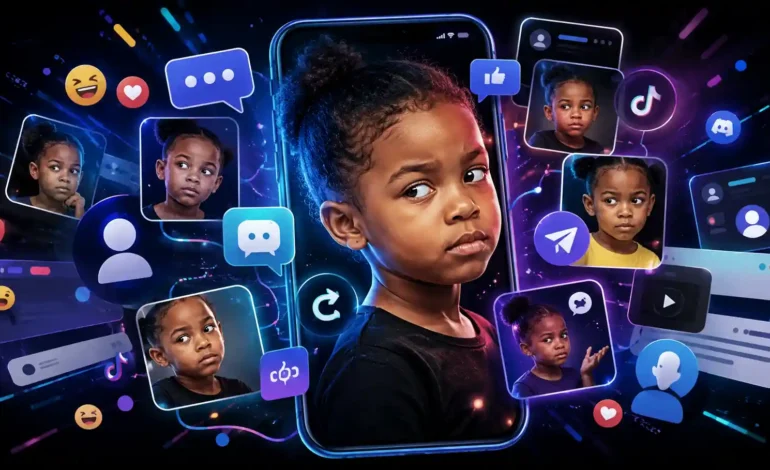
Internet trends come and go, but a handful of reaction images manage to stay relevant for years. The Black Kid Meme — best known as the Side Eye version — is one of them. Long after it first appeared online, it continues to show up in comment sections, group chats, and video edits every single day. It has become the go-to visual response for calling out an obvious lie, reacting to unnecessary drama, or silently roasting someone without typing a single word.
This article walks through where the meme came from, why it became such a lasting piece of internet culture, the many spin-off versions people have created, and practical ways you can use it in your own posts and conversations today.
Where the Black Kid Meme Came From
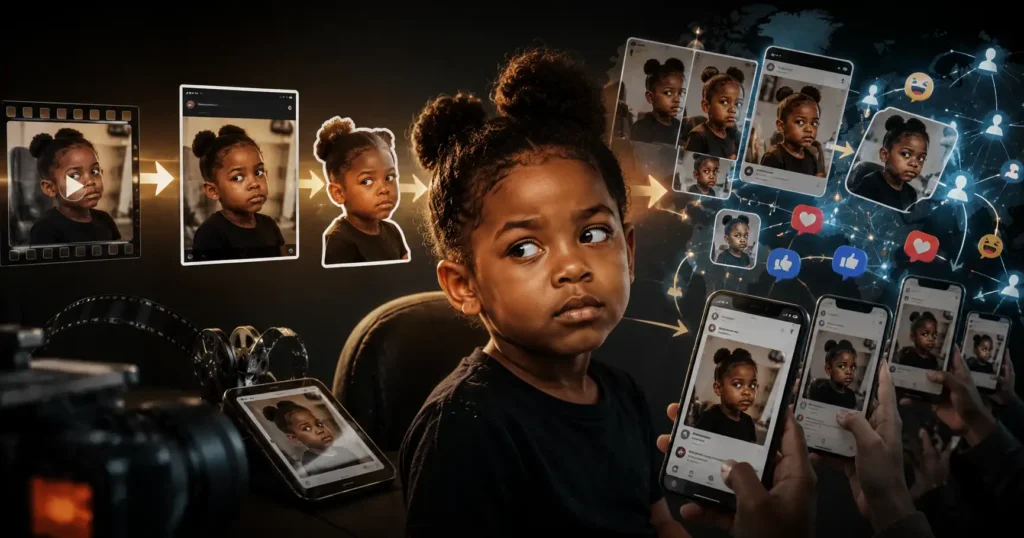
The meme traces back to a short video clip that captured a child giving an unmistakably doubtful, unimpressed look directly at the camera. There was no shouting, no exaggerated gesture — just a flat, silent stare that somehow communicated more skepticism than words ever could.
Once a screenshot of that expression started circulating on social platforms, it spread at lightning speed. Within a short period, users had turned the still image into a flexible reaction template that could be dropped into almost any conversation. It became shorthand for:
- Expressing disbelief
- Calling out sarcasm
- Signaling that something “doesn’t add up”
- Reacting to a claim nobody actually believes
As the image kept getting reshared, the online community began remixing it — adding captions, turning it into stickers, and producing transparent cut-out versions so it could be layered onto other pictures and videos. That single expression eventually outgrew its original post and became a permanent fixture of meme culture.
Why This Meme Refuses to Die
Plenty of reaction images fade after a few months of use. So why has this one held on for years? The answer comes down to relatability. The expression captures a feeling almost everyone recognizes instantly:
- Someone tells an obvious lie with a straight face
- A friend says “I’m five minutes away” for the third time
- A coworker labels a minor task “urgent” right before the workday ends
- Chaos breaks out in a group chat, and suddenly nobody claims responsibility
In every one of these situations, words feel unnecessary. One expression does the job that an entire paragraph of text would otherwise have to do. That efficiency — communicating a complete emotional reaction in a single frame — is exactly what makes a meme format last.
This same principle explains why closely related expressions also went viral on their own, including annoyed, confused, startled, and unimpressed variations of the same reaction style. Each one taps into a universally understood feeling, which is why audiences keep coming back to them instead of letting them fade.
Popular Variations of the Black Kid Meme
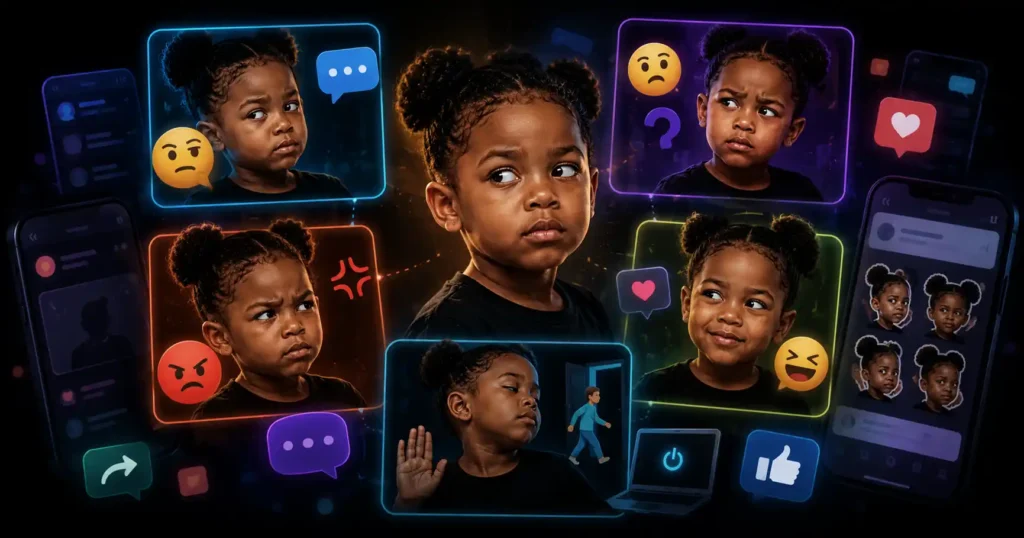
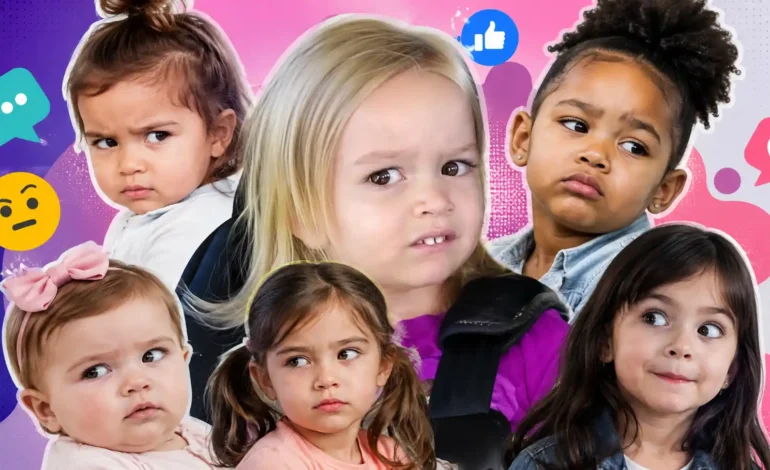
As the format matured, the community began splitting it into distinct sub-categories, each built around a slightly different mood. Some of the most widely shared versions include:
Skeptical or Doubtful Reaction
The original version, used whenever a statement sounds too convenient to be true.
Confused Reaction
A variation used for moments of genuine bewilderment — when something makes no sense at all, rather than sounding like a lie.
Annoyed or Frustrated Reaction
Used to respond to something mildly irritating rather than outright suspicious.
Amused or Smiling Reaction
A softer version for lighthearted teasing rather than sharp sarcasm.
Exit or “Logging Off” Reaction
A humorous variation used when someone wants to signal they are mentally checking out of a dramatic conversation.
Each spin-off carries its own tone, but the original skeptical stare remains the most recognized and most frequently shared version — the one people default to when nothing else quite captures the moment.
How the Black Kid Meme Is Used Across Social Media
Different platforms have adopted the format in slightly different ways, which is part of why it has stayed culturally relevant for so long.
TikTok: Commonly layered over storytelling videos, especially during the moment a creator explains “the red flag” in a story or narrates an awkward encounter.
Instagram: Frequently appears in reels, green-screen edits, and carousel posts built specifically for reaction content.
Twitter/X: Used as a quote-reply to a questionable or unbelievable post, replacing a written response entirely.
Discord and WhatsApp: Shared as a sticker or emote to stand in for short phrases like “really?”, “be serious,” or “I don’t believe that for a second” — all without typing anything.
Facebook Groups: Dropped into comment threads as a wordless way to react to gossip or contested claims.
Across every platform, the appeal is the same: it delivers a strong, precise emotional reaction faster than a written comment ever could.
Best Captions to Pair With the Black Kid Meme
If you’re planning to use this reaction image in your own posts, pairing it with the right caption makes a big difference. Some caption ideas that consistently perform well include:
- “When someone says ‘trust me.'”
- “When your friend says they’ll be ready in five minutes.”
- “When the group chat goes quiet after the drama starts.”
- “When your coworker suggests ‘team bonding.'”
- “When someone claims pineapple doesn’t belong on pizza.”
- “When the teacher says, ‘this won’t be on the test.'”
- “When your sibling acts innocent right after causing chaos.”
- “When someone at one percent battery insists they’re ‘totally fine.'”
The formula works because the caption sets up an everyday, relatable scenario, and the image delivers the punchline without needing further explanation.
Tips for Creating Your Own Version
If you want to build your own meme using this format for TikTok edits, YouTube thumbnails, or sticker packs, keep a few best practices in mind:
- Keep the caption short. The strongest examples are a single sentence. The image is already doing most of the emotional work.
- Match the tone to the platform. A sharper, more sarcastic caption tends to perform better on Twitter/X, while TikTok captions often work better when they’re part of a short story format.
- Use a transparent cut-out when layering the expression over another photo or video clip, so it blends naturally instead of looking like a pasted sticker.
- Don’t overuse it in one post. Because the format is so recognizable, using it once for maximum impact tends to land better than repeating it multiple times in the same piece of content.
- Stay current with new caption trends. Meme captions evolve quickly, so refreshing your wording every few months keeps the content feeling current rather than dated.
Why This Format Still Stands Out
There is no shortage of skeptical or doubtful reaction images circulating online, yet this particular one has consistently outperformed similar formats. A few reasons explain its staying power:
- The expression feels genuine rather than staged or exaggerated
- It captures sarcasm, doubt, and attitude in a single frame
- It adapts to nearly any situation, from serious to silly
- It’s instantly recognizable, even without a caption
- Its many variations cover a full emotional range, from mild annoyance to full disbelief
That combination of authenticity and flexibility is rare in meme culture, where most formats burn out within a matter of weeks.
Read also: Niche Baby Meme: The Complete Guide to This Internet Comedy Trend
Final Thoughts
What started as a single candid expression has turned into one of the internet’s most durable reaction formats. It works because it says exactly what needs to be said — skepticism, disbelief, sarcasm, or amusement — without requiring a single word of explanation.
Whether you’re dropping it into a group chat, building a TikTok reaction edit, or replying to a questionable post online, the Black Kid Meme continues to prove that sometimes a single look really does say everything.