Tung Tung Tung Sahur: The Story Behind the Internet’s Strangest Wooden Meme
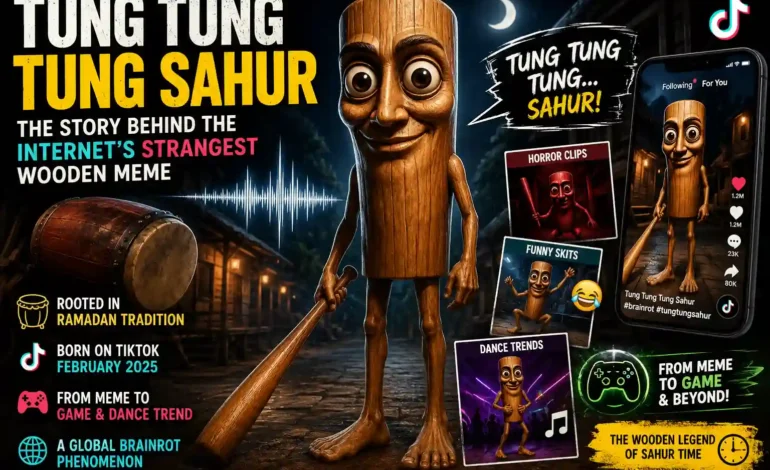
Few internet characters have spread as quickly or as confusingly as Tung Tung Tung Sahur, also known online as “Triple T.” A wooden, stick-like figure with an exaggerated face and a baseball bat in hand, this AI-generated creature has taken over TikTok feeds worldwide, appearing in horror clips, comedic skits, and even dance videos set to major pop releases. Despite its massive reach, most people who share or laugh at the meme have little idea where it came from or what its name actually means. Understanding Tung Tung Tung Sahur means looking at three things at once: a real cultural tradition, an internet trend known as “brainrot,” and the mechanics of how TikTok turns fragments of culture into viral characters.
What Does “Tung Tung Tung Sahur” Actually Mean?
At its core, the phrase is rooted in a real practice. In Indonesia and Malaysia, communities have long used drumming to wake people before dawn during Ramadan for sahur, the pre-dawn meal Muslims eat before beginning their daily fast. “Tung tung tung” is an onomatopoeia representing the sound of the wooden drum or gong used for this wake-up call, while “sahur” refers directly to the meal itself.
The meme takes this tradition and exaggerates it into folklore. According to the character’s own viral description, if someone is called for sahur three times and fails to respond, an eerie creature resembling a humanoid drum will appear at their home. The figure carries a baseball bat and is said to punish those who ignore the wake-up call. This invented mythology, delivered through an unsettling Indonesian text-to-speech voiceover, is what gave the character its unsettling, almost horror-adjacent tone from the very beginning.
Where the Meme Came From
The character first appeared on TikTok in February 2025, created using AI image and voice generation tools. Its origin is tied to the wider wave of so-called “Italian brainrot” memes that had already gone viral, featuring bizarre AI-generated creatures such as a shark wearing sneakers and a crocodile fused with a bomber plane. Following that trend, Indonesian internet users produced their own version rooted in local culture, which became Tung Tung Tung Sahur.
The original ten-second clip featured the anthropomorphic wooden figure accompanied by a voiceover describing it as a frightening anomaly that only appears during sahur time. Although the character is generally filed under the Italian brainrot umbrella online, its actual roots are Indonesian, drawing directly from Ramadan customs rather than Italian culture.
Some accounts of the meme’s history point to the TikTok user @noxaasht as the creator who introduced the anthropomorphic drum figure as part of this broader trend, even though the character’s cultural material is distinctly Southeast Asian rather than Italian.
From a Single Clip to a Viral Character
Once the original video spread, TikTok users began remixing it endlessly. Creators reimagined the wooden figure in different scenarios: swinging its bat and running before exploding, being drawn with a mechanical pencil, or appearing in increasingly absurd and unrelated settings. As Ramadan came to a close in March 2025, the meme evolved again, with Indonesian users imagining the creature “returning home” after finishing its nightly duty of waking people for sahur.
This pattern of constant remixing is central to how the character grew. Rather than staying tied to a single joke or format, Tung Tung Tung Sahur became a flexible symbol that different creators could reshape to fit new punchlines, aesthetics, or emotional tones.
Understanding “Brainrot” as a Meme Category
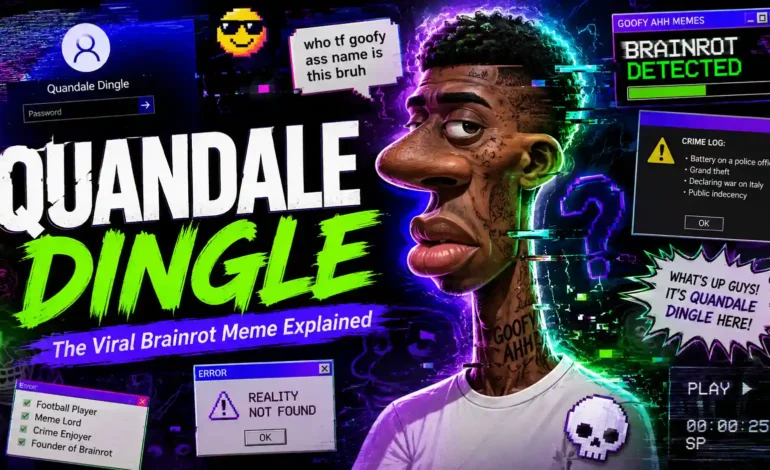
To understand why the character caught on so widely, it helps to understand the term “brainrot” itself. In online culture, brainrot describes content that is fast, repetitive, absurd, often AI-generated, and built around instantly recognizable sounds or phrases. It typically strips away context and logical explanation, relying instead on rhythm, visual strangeness, and repetition to generate an almost involuntary reaction of laughter or fascination.
This style of content does not require viewers to understand its meaning before engaging with it. In fact, confusion is often part of the appeal. A viewer encounters a strange character, hears a nonsensical but catchy phrase, senses that a wider community is already “in on” the joke, and rewatches the content to try to decode it. This cycle is exactly what algorithmic platforms like TikTok are built to reward.
Tung Tung Tung Sahur fits this mold closely: it is visually chaotic, sonically distinct, emotionally unserious on the surface, and endlessly remixable, even though it retains a real cultural anchor that separates it from purely random internet nonsense.
Not Mockery, But Absurd Repurposing
Despite drawing on Ramadan traditions, the meme is generally not interpreted as an attempt to mock Islam or Islamic practice. Instead, it takes a specific cultural theme, strips it of its original context, and turns it into something absurd and viral. This is a common process in internet meme culture: familiar cultural material is decontextualized and reassembled until its entertainment value comes from unpredictability and illogic rather than any direct commentary on its source.
The reaction the meme produces tends to be immediate and hard to explain rationally, an almost automatic laugh triggered by the character’s strange design and repetitive audio, rather than a considered response to its content.
The Character’s Combat Stats and Fictional Lore
As the meme grew, online communities built an entire fictional profile around the character, treating it like a fighting-game or wiki entry. Within this fan-created lore, Tung Tung Tung Sahur is described as an “anomaly” with a humanoid, drum-like inorganic body and a highly expressive face. Fans have assigned it abilities including teleportation, telekinesis (particularly the power to summon its own bat), and shape-shifting, with a “Second Form” said to make it even larger and more powerful.
According to this fan lore, the character has power levels compared to other brainrot figures such as Brr Brr Patapim, Bombardiro Crocodilo, and Cappuccino Assassino, with attack and durability ratings described in exaggerated terms like “Large Building Level.” Its intelligence is described as ambiguous within this invented framework, since the character shows combat ability in fan fiction but also falls for obvious traps and only appears during a very specific time tied to food.
This kind of elaborate, tongue-in-cheek lore-building is common in brainrot meme culture, where communities treat absurd AI-generated characters with the same seriousness typically reserved for established franchise characters, reinforcing the sense that these figures are becoming their own form of internet-native intellectual property.
From Meme to Modular Character IP
What makes Tung Tung Tung Sahur particularly notable is how it has moved beyond a single joke format into something closer to a character system. The figure has been connected to online games, including appearances associated with titles like Steal a Brainrot and Fortnite, extending its reach beyond short-form video into interactive spaces.
One of the clearest signs of this shift is a dance trend pairing the character with Taylor Swift’s song “I Knew It, I Knew You,” her original track for Toy Story 5. Swift released the song on June 5, 2026, ahead of the film’s June 19 theatrical release, and TikTok users quickly began pairing the sentimental, nostalgic single with the absurd wooden figure in dance-style videos.
The pairing works precisely because of how mismatched it is: a cursed, AI-generated character rooted in Indonesian Ramadan tradition set against a polished, emotionally resonant single from one of the biggest pop stars in the world, tied to a major Disney and Pixar franchise. On TikTok, that contrast is the joke itself, and it demonstrates how the character can be inserted into completely different emotional and cultural contexts without losing its recognizability.
This adaptability is what separates brainrot characters like Tung Tung Tung Sahur from ordinary viral clips. It can function as a horror figure, a comedic prop, a dance partner, or a mascot depending on the audio and context layered around it, all while remaining instantly recognizable.
Copyright and Ownership Questions
As the character has grown in popularity and moved into commercial and interactive spaces, questions have emerged around who owns it. There have been claims by a company referred to as Mementum Lab asserting rights over the character’s likeness, though there remains broader uncertainty about how copyright protection applies to AI-generated images and characters in general. This uncertainty reflects a wider, unresolved issue across the internet as AI-generated memes increasingly attract commercial interest despite unclear authorship.
Why This Matters Beyond the Joke
The rise of Tung Tung Tung Sahur illustrates a broader shift in how culture spreads and attaches itself to audiences online. Traditionally, characters gained cultural weight through institutions: studios, publishers, networks, and coordinated marketing campaigns. Brainrot characters like this one often move in the opposite direction, starting as a rough, low-effort clip on a feed, then accumulating meaning through remixing, invented lore, gaming crossovers, and merchandising interest, with institutional recognition catching up only afterward.
The meme also shows that audiences, particularly younger users, are comfortable forming genuine attachment to unstable, synthetic characters that never had a traditional origin story, a franchise, or a marketing budget behind them. A prompt, a voice filter, and enough repetition can be enough to create a character that feels shared and familiar across a global audience.
For anyone trying to understand modern internet culture, Tung Tung Tung Sahur is a useful case study. It shows how a specific, real cultural practice, the drumming used to wake people for sahur during Ramadan, can be abstracted into a purely absurd, algorithm-driven character, while still retaining just enough of its original context to make it more than random noise. The wooden figure with the baseball bat did not need a studio, a script, or a marketing plan to become globally recognizable. It needed a rhythmic name, a strange face, a repeatable sound, and a platform built to reward exactly that kind of compressed, remixable content.