The TikTok Rizz Party: How a Random Sweet 16 Video Became an Internet Sensation
What Is the TikTok Rizz Party?
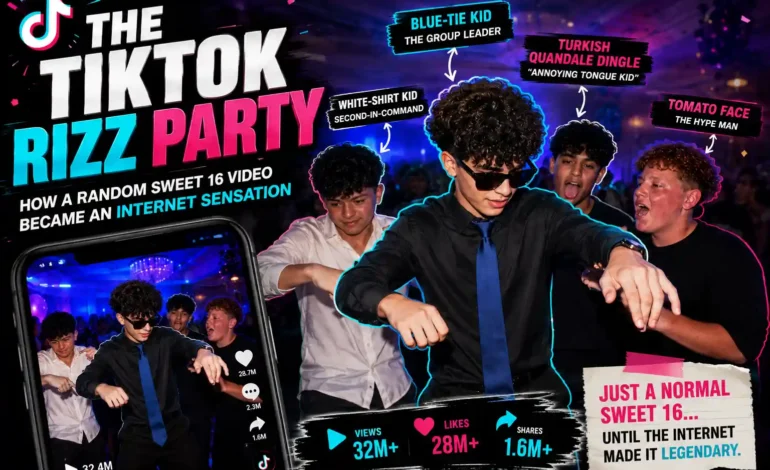
In March 2024, a short clip filmed at a teenager’s sweet sixteen celebration in New York exploded across social media. The footage, originally shared by an event company called Island Entertainment, shows a group of teenage boys dancing energetically to a popular song at the party. Within a short time, the video had racked up tens of millions of views and millions of likes, turning an ordinary birthday moment into a full-blown internet phenomenon now commonly referred to as the “TikTok Rizz Party.”
The Song Behind the Viral Moment
The soundtrack fueling the dance moves in the clip is “Carnival,” a track by Kanye West featuring Ty Dolla $ign. The song’s popularity only added momentum to the video’s spread, as users layered it into edits, remixes, and reaction content across platforms.
Where the Term “Rizz” Comes From
The word “rizz” — internet slang describing charisma or the ability to attract romantic interest — didn’t originate with this video. It had already entered mainstream online vocabulary a few years earlier, largely popularized by streamer Kai Cenat around 2021. The rizz party video simply borrowed and reinforced the term’s cultural relevance rather than inventing it.
The Fictional Characters Internet Users Created
Because none of the teenagers in the video were publicly identified, internet communities took it upon themselves to invent nicknames and personalities for each person based purely on their appearance and behavior in the clip. It’s worth stressing that these personas are entirely fan-made fiction, not real biographical information about the teens involved. The most commonly referenced characters include:
- Blue-Tie Kid / Group Leader – Regarded as the central figure of the group, often shown leading the dancing and commanding attention.
- White-Shirt Kid / Second-in-Command – Portrayed as the leader’s loyal right-hand man, seen as physically strong but respectful of the group’s hierarchy, with some fans speculating he could challenge the leader’s position.
- Turkish Quandale Dingle (also nicknamed “Annoying Tongue Kid”) – Frequently the target of jokes, partly due to comparisons with an unrelated 2022 meme character named Quandale Dingle, and portrayed as someone trying hard to fit in with the group.
- Tomato Face / Tomato Boy – Nicknamed for his reddish complexion in the video, cast by fans as an enthusiastic hype man who follows the leader’s lead during the dancing.
Why the Video Resonated So Widely
Part of the appeal lies in how ordinary the situation actually is. The teenagers are simply a normal friend group enjoying a birthday party, yet online audiences projected an entire social hierarchy onto them, mirroring the kind of dynamics people recognize from their own school or friend circles. Creators built elaborate backstories and rivalries around figures who, in reality, are just anonymous kids having fun.
This mix of exaggerated online analysis applied to something completely mundane is part of what many describe as “brain rot” humor — content that’s funny precisely because of how little substance it actually has. There’s also an ironic layer to its popularity: many viewers who mock the video as “cringe” simultaneously can’t stop engaging with it, treating the joke itself as the entertainment.
The Real-Life Impact on the Teens Involved
According to interviews with the teenagers themselves, their sudden viral fame hasn’t been entirely positive — they’ve reported being teased or made fun of at school because of the video, though they say they generally brush it off. Meanwhile, some of the young men associated with the clip, including the “Blue-Tie Kid” and “Turkish Quandale Dingle” personas, have leaned into their newfound recognition by starting their own social media accounts in hopes of building a following from the attention.
Read More: Why “How Long Do Idiots Live” Went Viral: The Psychology Behind It
A Reflection of Modern Internet Culture
Ultimately, the TikTok Rizz Party phenomenon captures something distinct about how humor and virality function online today. Instead of relying on traditional jokes or wit, much of internet culture now thrives on turning ordinary, unscripted moments into elaborate narratives — proof that on the internet, fame can be handed to anyone, whether they’re seeking it or not.