The Ecommerce Problem More Traffic Can’t Solve
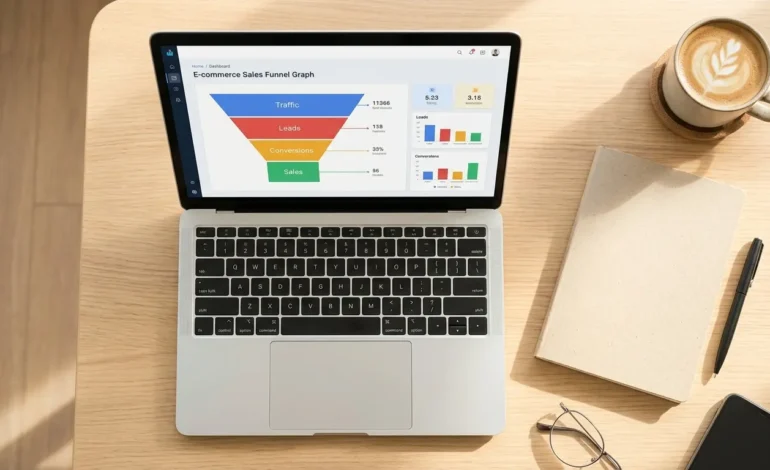
When an online store isn’t making enough sales, the first answer usually seems obvious:
Get more traffic.
Post more. Run more ads. Improve SEO. Try TikTok. Try Facebook. Try Instagram. Hire someone. Download another app. Find another strategy. The options are endless.
Basically, you just want to get more people through the door.
But what if people are already coming through the door and the real problem is what they see when they get there?
That’s the part I think gets missed far too often.
You can send hundreds or even thousands of people to a store, but if the store itself isn’t giving them enough reasons to feel confident about buying, more traffic isn’t necessarily going to solve anything.
In some cases, it can actually make the problem more expensive.
You’re basically paying to bring more people to a store that still isn’t ready to convert them.
More Traffic Is Not Always the Answer
Traffic matters. Obviously, you can’t make sales if nobody knows your store exists and nobody visits your store.
But there’s a huge difference between:
“Nobody is finding my store.”
and
“People are finding my store, but they aren’t buying.”
Those are two different problems, and they need different solutions.
If people are visiting but very few are buying, I’d look at the store itself before putting more money into bringing in more visitors.
Ask yourself:
What is someone seeing when they land on my page?
Do they immediately understand what I sell?
Do they understand why they should buy it?
Can they tell what makes my product different?
Do they trust the store?
Is the price clear?
Are there unanswered questions?
Is buying easy?
Those questions aren’t as exciting as “How do I get 10,000 visitors?” but they can matter a lot more.
Your Customer Doesn’t Know What You Know
The owner of a store usually understands the product perfectly.
They know why they made it. They know what it does. They know the quality. They know who it’s for.
The customer doesn’t.
They’re seeing it for the first time.
Sometimes sellers look at their own product page and think everything is obvious because they already know the answers.
A customer might be wondering:
What exactly am I getting?
Why does this cost this much?
How does it work?
Is this actually right for me?
What happens if I don’t like it?
How long will shipping take?
Can I trust this business?
If they have to work too hard to find those answers, a lot of them will simply leave.
They probably won’t email you and explain what confused them.
They just disappear.
And then it looks like a traffic problem when it may actually be a clarity problem.
Your Product Page Has to Do More Than Look Pretty
A beautiful store is great.
But pretty doesn’t automatically mean convincing.
Your product page has a job.
It needs to help someone go from:
“This looks interesting.”
to:
“I understand this, I trust this, and I want it.”
That means your page needs more than nice pictures.
Look at your description.
Does it actually explain the product, or does it just describe it?
There’s a difference.
If you sell a planner, for example, telling me it has 150 pages and a beautiful cover describes the planner.
Telling me how those pages can help me organize my week, keep track of appointments, stop forgetting tasks and feel less overwhelmed explains why I might actually want it.
People aren’t just buying the thing.
They’re buying what they believe it will help them do, solve, improve or feel.
Make that clear.
Trust Can Kill a Sale Before Price Ever Does
Sometimes sellers assume people leave because something is too expensive.
That happens, but price isn’t always the real issue.
Sometimes people leave because they simply aren’t confident enough to spend the money.
A customer might happily spend $70 with a store they trust and hesitate to spend $25 with a store they don’t.
Look at your store like someone who has never heard of you before.
Can they easily find contact information?
Are your policies clear?
Are shipping expectations easy to understand?
Do your product images feel consistent?
Are there reviews or other trust signals where appropriate?
Does the store feel finished?
Are there broken links, spelling mistakes or sections that look abandoned?
One small issue may not ruin a sale.
But several small doubts together can.
That’s what makes conversion problems difficult to spot.
Sometimes there isn’t one giant obvious problem.
There are ten little ones.
Stop Making People Hunt for Information
Customers shouldn’t have to become detectives.
If shipping matters, make it clear.
If the product comes in different sizes, explain them.
If something is digital, make sure the buyer knows that before purchasing.
If there are restrictions, say so.
If the product solves a specific problem, spell it out.
The goal isn’t to overload the page with information.
The goal is to answer the questions most likely to stop someone from buying.
We spend so much time thinking about attracting attention that sometimes we forget what happens after we get it.
Look at Your Store on Your Phone

This one sounds almost too simple, but do it.
Not from your laptop.
Not from your store editor.
Pick up your phone and go through your store exactly the way a customer would.
Click your social link.
Open your homepage.
Find a product.
Read the description.
Choose an option.
Add it to your cart.
Go toward checkout.
Now pay attention to anything annoying.
Text that’s difficult to read.
Buttons that are hard to tap.
Images that load slowly.
Pop-ups covering the screen.
Menus that feel confusing.
Important information buried too far down the page.
Something can look great on a desktop and still be frustrating on a phone.
Your customers aren’t going to patiently work around your store.
They have other options.
More Marketing Can Magnify a Weak Store
This is why I think sellers need to be careful about throwing money at traffic too early.
Let’s say your store converts poorly because your product pages are confusing.
You spend $500 on advertising.
Now you’ve paid to show that confusing page to more people.
The ad worked.
People clicked.
The store didn’t finish the job.
That distinction matters.
Otherwise, you can end up blaming the wrong thing.
You blame the ad.
Then you try another platform.
You hire someone else.
You buy another app.
You change your SEO.
You pay for more traffic.
And you keep spending money without ever fixing the original problem.
I learned that asking “What should I buy next?” is usually a lot less useful than asking:
“What is actually wrong?”
That question has shaped a lot of what I now build through The Ava Edit.
I wanted to create resources for the seller who knows something isn’t working but doesn’t know exactly what it is.
Because that’s a frustrating place to be.
You can see the traffic coming in. You can see people viewing products. You can see that something isn’t connecting.
But when you don’t know what the actual problem is, it becomes very easy to start spending money on random solutions.
The Tools I Built Around That Exact Problem
That’s why I created separate growth systems for Shopify and Etsy sellers.
The Shopify SEO, CRO, AEO & GEO Growth Bundle is designed for store owners who know something isn’t working but aren’t always sure where to start.
It walks through the areas that can affect visibility, trust and conversion, including SEO, product pages, store structure, customer experience, conversion issues and newer search methods such as AEO and GEO.
The goal isn’t to hand someone another huge checklist and leave them overwhelmed.
It’s to help them work through the store in a logical order, spot weak areas and understand what deserves attention first.
The Etsy Growth Audit System does the same thing specifically for Etsy sellers.
It looks at SEO, listing quality, pricing clarity, trust signals, conversion problems, AI-search readiness, AEO, GEO and the other details that can affect whether a listing gets found and whether someone feels confident enough to buy.
One thing that was really important to me when I built both systems was making them simple enough for someone who is completely new to ecommerce.
There are plenty of resources out there that tell sellers to “improve SEO,” “fix conversion” or “optimize your listings.”
But if you’re a beginner, that can still leave you thinking:
Okay… but what does that actually mean, and what am I supposed to do?
I didn’t want my products to do that.
So I broke everything down in plain language.
The goal isn’t just to tell someone what to change.
I want them to understand why they’re changing it, how it can affect their store and what they should actually be looking for.
The explanations are numbered as well. If you’re working through a checklist and hit something you don’t understand, you can match that number to the explanation and see what it means, why it matters and what you’re supposed to be looking at.
You don’t need to be an SEO expert.
You don’t need to be a marketer.
You definitely don’t need to be a developer.
You just need to be willing to look at your store a little differently.
That mattered to me because I know how frustrating it is to be told you have a problem without anyone clearly explaining what that problem means or how you’re supposed to fix it.
Both systems are really built around one simple idea:
Before you spend more money trying to get more people to your store, understand what may be stopping the people who are there from buying.
And if you’ve ever looked at your store and thought, “I know something is wrong, I just don’t know what,” that is exactly the problem these systems are meant to help with.
Fix the Leaks Before You Turn Up the Faucet

Think of traffic like water.
If you have holes in the bucket, pouring in more water doesn’t fix the holes.
For an ecommerce store, those leaks can include:
- unclear product positioning
- weak descriptions
- confusing pricing
- missing trust signals
- difficult navigation
- poor mobile experience
- unanswered customer questions
- weak calls to action
- inconsistent branding
- friction between interest and checkout
You don’t necessarily need to rebuild your entire store.
Sometimes a few well-chosen changes can make the buying experience much clearer.
The hard part is figuring out which changes actually matter.
The Smart Store Audit Is Coming Soon
The The Ava Edit Smart Store Audit is something I’m currently building, and it will be coming soon. It is not available for purchase yet.
The goal is for it to do more than just point out problems.
I want it to help sellers understand what needs attention first, why it matters, and what to do next.
It will include tools like the Price Auditor and Ask Ava so sellers can get help understanding recommendations, prioritizing what to fix and making decisions without feeling like they need to be an ecommerce expert first.
I’m building it around the same idea behind the rest of The Ava Edit: make ecommerce easier to understand, help sellers get clear on what is actually holding them back and give them a better idea of what to work on before they spend more money chasing traffic.
Because knowing what to fix first can be far more useful than having another giant list of things you could be doing.
Before You Spend More Money, Do This
If your store is getting traffic but sales are disappointing, give yourself one hour before buying anything else.
Choose one of your most important products.
Pretend you’ve never seen it before.
Now ask:
Do I know exactly what this is?
Do I know who it’s for?
Do I know why I should care?
Do I understand the price?
Do I trust this store?
Are my biggest questions answered?
Can I buy without getting confused?
Would I feel comfortable giving this business my payment information?
And the hardest question:
If this wasn’t my store, would I buy from it?
That question can be uncomfortable.
But it can also tell you a lot.
Traffic Is Valuable. Don’t Waste It.
I’m not saying stop marketing.
I’m definitely not saying traffic doesn’t matter.
I’m saying traffic becomes much more valuable when the store receiving that traffic is actually ready for it.
A hundred people landing on a strong page can be more valuable than a thousand landing on a confusing one.
So before deciding you need more visitors, take a close look at the experience you’re already giving the visitors you have.
What are they seeing?
Where might they hesitate?
What questions are you leaving unanswered?
Where are you making buying harder than it needs to be?
Sometimes growth starts with getting more people to your store.
But sometimes growth starts with giving the people who are already there a better reason to stay.
And if you’re reading this thinking, “I know something is off with my store, but I honestly don’t know where to start,” that’s exactly who I built The Ava Edit for.
You don’t need another person telling you to “optimize your store” without explaining what that means.
You need to be able to look at your store and say:
This is the problem.
This is why it matters.
This is what I need to work on next.
That’s what the Shopify and Etsy growth systems are designed to help you do.
If you’ve been getting traffic, trying different strategies and still feeling like you’re guessing, it may be worth looking at the store itself before you spend another dollar trying to bring more people to it.
That’s where I’d start.
You can explore the Shopify and Etsy growth systems through The Ava Edit.
Sometimes the next step isn’t more traffic.
Sometimes the next step is finally figuring out what needs fixing.