How to Get Rid of Fruit Flies: Simple and Effective Ways to Eliminate Them

Fruit flies are small insects that can quickly become a problem in kitchens, dining areas, and other parts of the home. They are commonly attracted to ripe fruits, vegetables, sugary liquids, food waste, and other sources of moisture. Although fruit flies are small, they can multiply quickly and become difficult to control if their breeding areas are not removed.
Getting rid of fruit flies requires more than simply killing the insects you see flying around. You also need to identify what attracts them, remove their food sources, clean areas where they reproduce, and use effective traps to catch adult flies.
Fortunately, you do not always need professional pest control to deal with a fruit fly problem. Simple household methods, such as apple cider vinegar traps, proper kitchen cleaning, and safe food storage, can help reduce their numbers.
This guide explains how to get rid of fruit flies using practical methods, how to prevent them from returning, and when professional pest control may be necessary.
1. What Are Fruit Flies and Why Do They Appear?

Fruit flies are tiny insects that are commonly found around ripe or rotting fruits, vegetables, and other organic materials. They are usually brownish or yellowish in color and have noticeable red eyes, although their appearance can vary.
These insects are especially common in warm environments where food and moisture are easily available. Kitchens provide ideal conditions because they often contain fresh produce, food scraps, recycling containers, and damp cleaning areas.
Fruit flies are attracted to the smell of fermentation. When fruits and vegetables become overripe or begin to rot, they release odors that attract adult flies. Once they find a suitable food source, they may lay eggs nearby.
The life cycle of fruit flies is relatively short. Under favorable conditions, eggs can hatch within approximately 24 to 30 hours. The larvae feed on fermenting organic material before developing into adult flies. This quick reproduction cycle explains why a few fruit flies can turn into a noticeable infestation within a short period.
Common places where fruit flies appear include:
- Fruit bowls containing ripe or damaged produce.
- Kitchen trash cans and compost containers.
- Open bottles of juice, wine, or other sweet drinks.
- Dirty dishes and leftover food.
- Drains containing organic buildup.
- Recycling bins with food or beverage residue.
Identifying these sources is the first step toward controlling fruit flies effectively.
2. What Attracts Fruit Flies to Your Home?
Understanding what attracts fruit flies can help you remove the conditions that allow them to survive and reproduce. These insects are mainly attracted to food odors, moisture, and organic materials.
Here are some common things that attract fruit flies.
Overripe Fruits and Vegetables
Overripe fruits are one of the most common reasons fruit flies enter homes. Bananas, apples, peaches, tomatoes, melons, and other produce can release attractive odors as they ripen or begin to spoil.
Even a small piece of damaged fruit can provide enough food for fruit flies to gather and reproduce.
Food Waste and Garbage
Garbage cans often contain fruit peels, vegetable scraps, leftover food, and other organic waste. When these materials begin to break down, they create odors that attract fruit flies.
Leaving kitchen waste uncovered for several days can make the problem worse.
Sugary Drinks and Liquid Residue
Fruit flies are attracted to sugary liquids and fermented beverages. Empty juice cartons, soda cans, wine bottles, and sticky drink spills can become attractive feeding areas.
Even small amounts of liquid left inside containers can attract these insects.
Dirty Kitchen Surfaces
Food particles and spills on countertops, tables, and kitchen floors can provide feeding opportunities. Fruit flies may also gather around dirty dishes and kitchen sinks where food residue remains.
Moisture and Organic Buildup
Damp areas containing organic material can provide suitable conditions for fruit flies. Kitchen drains, garbage disposals, and wet cleaning cloths may attract certain small flies.
Removing these sources makes your home less attractive to fruit flies.
3. How to Get Rid of Fruit Flies Naturally

Natural methods can help control fruit flies without requiring complicated equipment or expensive products. However, the most effective approach is to combine traps with proper cleaning and removal of breeding sources.
Here are some practical ways to get rid of fruit flies naturally.
Use an Apple Cider Vinegar Trap
Apple cider vinegar is one of the most popular household methods for catching fruit flies. Its fermented smell attracts adult flies, making it useful for reducing their numbers.
To make this trap:
- Pour a small amount of apple cider vinegar into a glass or small bowl.
- Add two or three drops of dish soap.
- Mix gently to distribute the soap.
- Place the container near areas where fruit flies are commonly seen.
- Check the trap regularly and replace the mixture when needed.
The vinegar attracts fruit flies, while the dish soap reduces the surface tension of the liquid. This makes it harder for flies to escape after landing.
Make a Plastic Wrap Trap
Another simple method involves using a container covered with plastic wrap.
Follow these steps:
- Place a small amount of apple cider vinegar or ripe fruit inside a jar.
- Cover the opening with plastic wrap.
- Secure the plastic wrap around the edges.
- Make several small holes in the covering using a toothpick.
- Place the jar near the fruit fly activity.
The smell attracts fruit flies through the holes. Once inside, they may have difficulty finding their way out.
Replace the bait regularly to keep the trap effective.
Use a Paper Funnel Trap
A paper funnel trap is another practical option for catching fruit flies.
To prepare it, place a small piece of ripe fruit or some apple cider vinegar inside a jar. Roll a piece of paper into a funnel shape and place it in the opening, keeping the narrow end inside the jar without touching the bait.
Fruit flies can enter through the funnel but may struggle to escape.
Place the trap near the areas where you notice the most activity and replace the bait when necessary.
Use Store-Bought Fruit Fly Traps
Commercial fruit fly traps are available in many supermarkets and home improvement stores. These products usually contain attractants that draw adult fruit flies into a container or sticky surface.
Follow the manufacturer’s instructions when using them. Place traps away from food preparation surfaces and keep them out of reach of children and pets.
4. How to Make a DIY Fruit Fly Trap
DIY fruit fly traps are inexpensive and easy to prepare using common household materials. Choosing the right trap depends on the materials available and where fruit flies are gathering.
Here are three simple options.
Apple Cider Vinegar and Dish Soap Trap
This is a straightforward option for catching adult fruit flies.
You need:
- Half a cup of apple cider vinegar.
- Two or three drops of dish soap.
- A small bowl or glass.
Pour the vinegar into the container and add the dish soap. Place the trap near fruit bowls, garbage cans, or other areas where fruit flies appear.
The vinegar attracts the insects, while the soap helps trap them in the liquid.
Ripe Fruit and Plastic Wrap Trap
This trap uses the smell of ripe fruit to attract fruit flies.
You need:
- A small piece of ripe banana or another sweet fruit.
- A small glass or jar.
- Plastic wrap.
- A toothpick.
Place the fruit inside the jar and cover the opening with plastic wrap. Secure the covering and make several small holes.
The fruit’s smell attracts fruit flies, which enter through the holes and become trapped inside.
Wine or Juice Trap
Leftover wine or fruit juice can also be used to attract fruit flies.
You need:
- A small amount of leftover wine or fruit juice.
- A glass or small container.
- A few drops of dish soap.
Pour the liquid into the container and add a few drops of dish soap. Place it near the area where fruit flies are active.
The sweet or fermented smell attracts the insects, while the soap helps prevent them from escaping.
Regardless of which trap you choose, remember that traps only catch adult fruit flies. They will not completely solve the problem if eggs and larvae remain in nearby food waste or other breeding areas.
5. How to Prevent Fruit Flies from Coming Back
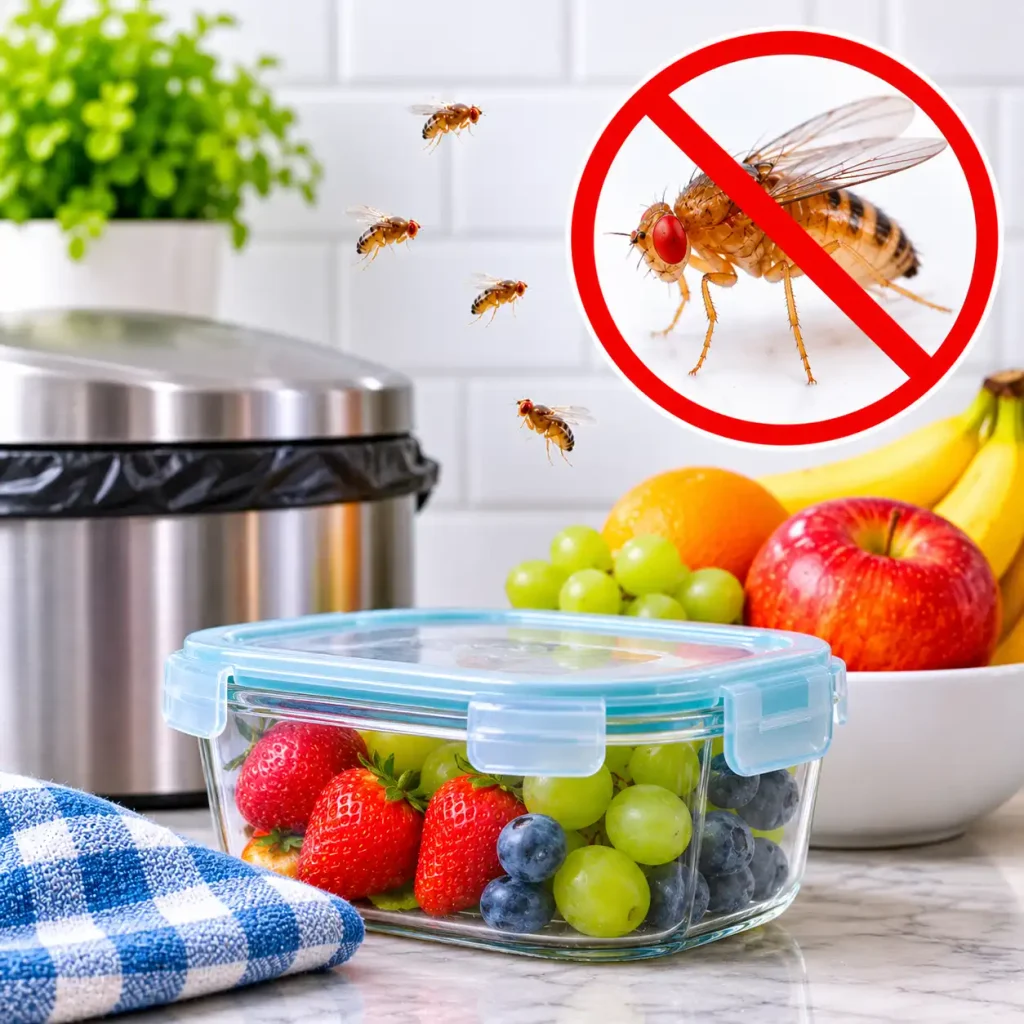
After reducing the number of fruit flies, prevention is important to avoid another infestation. Keeping your kitchen clean and storing food properly can make a significant difference.
Store Fruits and Vegetables Properly
Avoid leaving ripe or damaged fruits exposed on kitchen counters for long periods.
Store suitable fruits and vegetables in the refrigerator, especially when they are fully ripe. Keep produce in clean containers and check it regularly for signs of spoilage.
Remove damaged or rotting items immediately instead of allowing them to remain in fruit bowls.
Take Out Kitchen Garbage Regularly
Food waste can attract fruit flies if it remains inside the home for too long.
Use garbage cans with tight-fitting lids and empty them regularly. Clean the inside of the bins to remove sticky residue and food particles.
If you use a compost container, keep it covered and empty it regularly.
Clean Kitchen Counters and Floors
Wipe kitchen counters after preparing meals and remove food spills as soon as possible.
Pay attention to areas around fruit bowls, kitchen appliances, sinks, and trash cans. Sweep or vacuum the floor to remove small food particles that may attract insects.
Regular cleaning reduces the food sources that fruit flies need to survive.
Wash Dishes Immediately
Dirty dishes, glasses, and food containers can attract fruit flies, particularly when they contain sugary liquids or leftover food.
Wash dishes after meals instead of leaving them in the sink overnight. Rinse bottles, cans, and food containers before placing them in recycling bins.
Keep Drains Clean
Kitchen drains can collect food particles and organic buildup that may attract small flies.
Clean drains regularly using an appropriate drain brush or cleaning product. Remove visible debris and clean around the drain opening.
Avoid relying only on pouring liquids down the drain. Physical removal of organic buildup is important when cleaning these areas.
Check Food Storage Areas
Inspect pantry shelves, cabinets, and storage containers for damaged produce, spills, or forgotten food items.
Keep food in sealed containers and clean shelves when necessary. These simple steps help prevent fruit flies from finding suitable places to feed and reproduce.
6. Common Mistakes to Avoid When Dealing with Fruit Flies
Some common mistakes can make a fruit fly problem harder to control. Even when traps are working, overlooking breeding areas can allow the infestation to continue.
Here are some mistakes to avoid.
Only Killing Adult Fruit Flies
Swatting or killing visible fruit flies may reduce the number of insects you see, but it does not remove their eggs or larvae.
You need to identify and clean the areas where fruit flies reproduce. Otherwise, new adults may continue appearing.
Leaving Overripe Fruits Outside
Leaving bananas, tomatoes, or other ripe produce uncovered can attract more fruit flies.
Store ripe fruits properly and remove spoiled produce as soon as possible.
Ignoring Kitchen Drains
Some people focus only on fruit bowls and garbage cans while ignoring drains and other damp areas.
Organic buildup inside drains can provide suitable conditions for certain small flies. Clean these areas when fruit flies continue appearing despite removing other food sources.
Not Replacing DIY Traps
DIY traps become less useful when the bait dries out or becomes contaminated.
Check traps regularly and replace their contents when necessary. Keeping traps fresh helps maintain their effectiveness.
Using Too Many Traps Without Cleaning
Placing several traps around the kitchen may catch adult flies, but it will not solve the underlying problem.
Always combine trapping with proper food storage, garbage disposal, and regular cleaning.
7. When Should You Consider Professional Pest Control?
Most minor fruit fly problems can be managed with household cleaning, proper food storage, and simple traps. However, professional pest control may be helpful when the infestation continues despite your efforts.
Consider professional assistance if:
- Fruit flies keep appearing after you remove visible food sources.
- Large numbers of flies are present in different rooms.
- You cannot identify where the insects are breeding.
- The problem continues despite regular cleaning and trapping.
- You suspect the insects may be coming from hidden or inaccessible areas.
It is also important to identify the type of insect before choosing a treatment. Fruit flies, drain flies, and fungus gnats can look similar, but they have different breeding habits.
A pest control professional can help identify the insects, locate possible breeding areas, and recommend suitable treatment methods.
Avoid using insecticides near exposed food, dishes, or food preparation surfaces. Always follow product instructions and keep treatments away from children and pets.
Conclusion
Getting rid of fruit flies requires identifying and removing the sources that attract them. Overripe fruits, food waste, sugary liquids, dirty surfaces, and organic buildup can all contribute to a fruit fly problem.
Simple solutions such as apple cider vinegar traps, plastic wrap traps, and paper funnel traps can help catch adult fruit flies. However, these methods work best when combined with regular kitchen cleaning, proper food storage, and frequent garbage disposal.
To prevent fruit flies from returning, keep ripe produce covered or refrigerated, clean kitchen drains, wash dishes regularly, and remove spoiled food immediately.
If fruit flies continue appearing despite these efforts, consider professional pest control to identify hidden breeding areas and find an effective solution.
Read also: How to Clean an Oven: Easy Steps for a Spotless Oven