What A Home Value Estimate Can Tell You Before You Sell
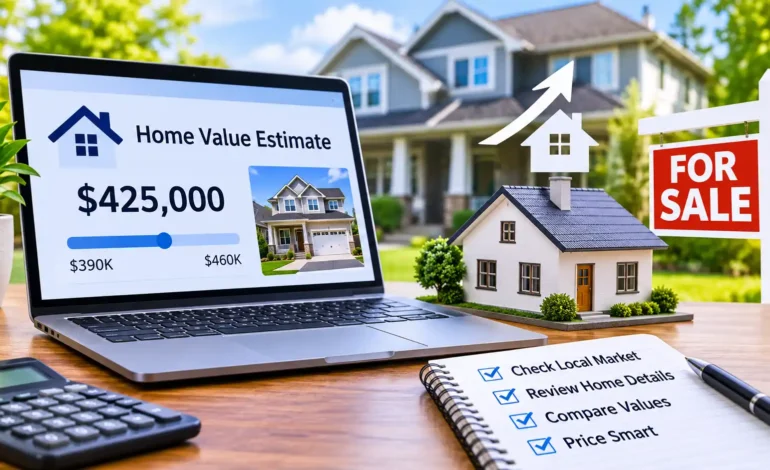
An online home value estimate can be a useful first step if you are thinking about selling. A tool such as kelleybluebookhomes.com/home-value-estimator can give you a quick reference point, help you identify missing property information, and prepare you to ask more informed questions about pricing.
Still, an estimate is not a promise of what a buyer will pay. The most useful approach is to treat it as one part of a larger review that includes your home’s condition, recent nearby sales, current competition, and the timing of your planned sale.
Table Of Contents
- Why A Home Value Estimate Is A Starting Point
- How Online Home Value Estimates Work
- Home Details That Can Change The Number
- Why Different Websites Show Different Values
- How Local Market Data Adds Context
- Estimate, CMA, And Appraisal Differences
- How To Check Your Estimate
- Common Pricing Mistakes
- A Home Value Checklist
Why A Home Value Estimate Is A Starting Point

A home value estimate is an opinion based on available information, not a guaranteed sale price or a calculation of your net proceeds. Even a small difference matters. On a $500,000 home, a 3 percent pricing difference equals $15,000 before commissions, repair costs, concessions, taxes, loan payoff amounts, and other selling expenses are considered.
The eventual sale price can be influenced by buyer demand, competing listings, financing terms, the property’s presentation, inspection findings, and the terms a buyer offers. An estimate is valuable because it gives you a starting point, not because it can account for every factor in a real transaction.
How Online Home Value Estimates Work
Most online estimates are produced through automated valuation models, often called AVMs. These systems analyze property and market data to identify patterns among similar homes. They commonly consider public records, square footage, bedroom and bathroom counts, year built, lot size, prior listing history, nearby sales, and broader neighborhood trends.
These models can be especially helpful when local records are complete, and the home resembles other properties that have sold nearby. They can be less precise for rural homes, unusual architecture, recently built homes, properties with few nearby sales, or homes with renovations that do not appear in public records.
Home Details That Can Change The Number
Two homes with the same square footage and number of bedrooms can command very different prices. Buyers do not evaluate a property by size alone. They also consider how well the home functions, how much maintenance it may need, and whether its features compare favorably with current alternatives.
- Updated kitchens and bathrooms
- Roof, HVAC, plumbing, and electrical condition
- Finished basements or permitted added living space
- Garage capacity, parking, and storage
- Lot size, privacy, views, and usable outdoor areas
- Floor plan, natural light, and overall layout
- Energy-efficiency improvements and smart-home systems
- Deferred maintenance, repairs, or visible wear
For example, a home with a newer roof and updated kitchen may compare more favorably with buyers than a similar home with aging systems and original finishes. That does not mean every improvement returns its full cost, but condition can affect buyer interest and pricing flexibility.
Why Different Websites Show Different Values
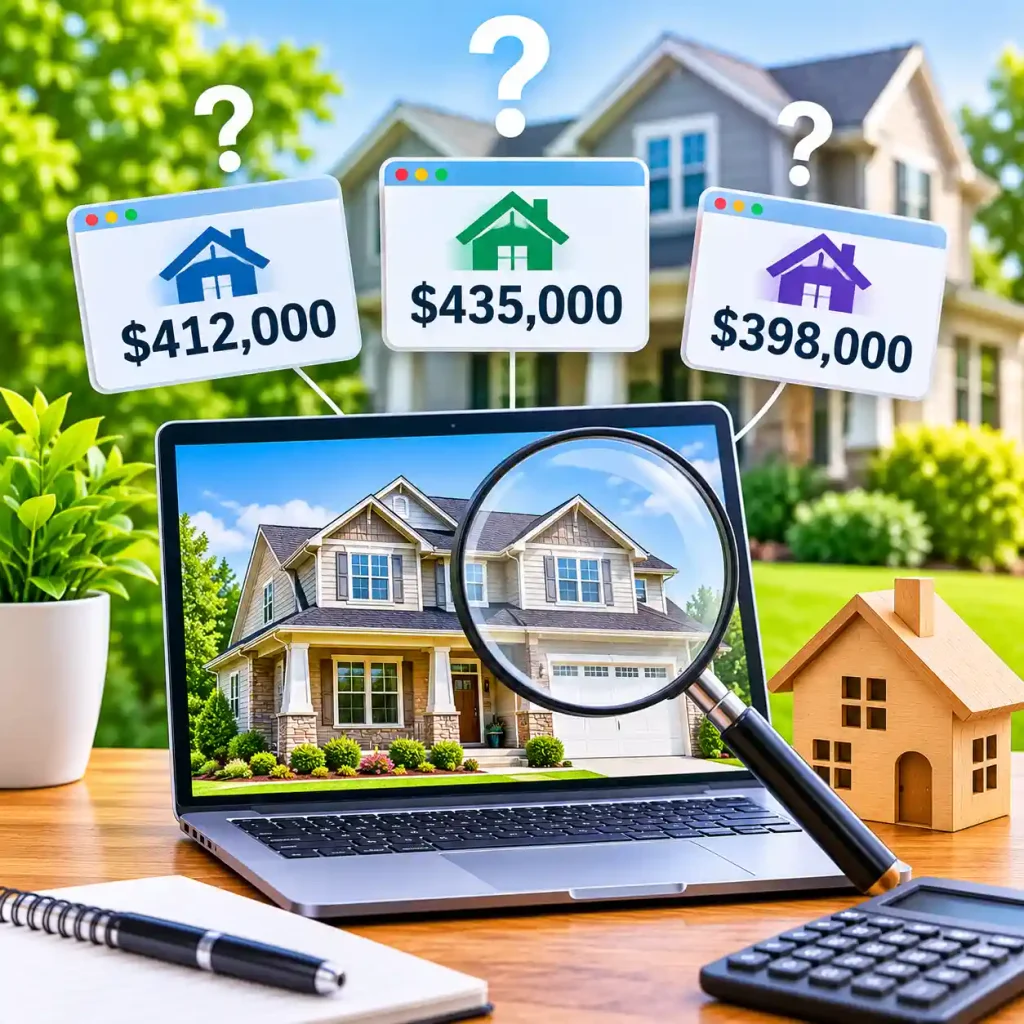
It is normal for estimates from different websites to vary. Each provider may rely on different data sources, use a different update schedule, select different comparable properties, or weigh property features differently. A disagreement between numbers does not automatically mean that one estimate is wrong.
What To Review When Numbers Do Not Match
- Confirm that bedrooms, bathrooms, square footage, lot size, and year built are correct.
- Look for an estimated range rather than focusing only on a single headline number.
- Check when the estimate was last updated.
- Review the comparable properties, if the tool makes them available.
- Pay attention to large gaps that may signal limited data or an unusual property.
A wide spread between estimates can indicate missing records, a recent renovation, few comparable sales, or fast local market changes. It is a reason to investigate further, not necessarily a reason to select the highest figure.
How Local Market Data Adds Context
National housing headlines can provide background, but they cannot price a specific home on a specific street. For example, national price data from August 2026 showed U.S. house prices up 2.4 percent from August 2025, while results varied across regions. Your neighborhood may be moving differently from the national average.
Recent sold homes show what buyers actually paid. Active listings show your current competition. Pending sales can indicate recent buyer activity, while price reductions and days on market can reveal whether sellers are adjusting their expectations. Focus most closely on homes with a similar location, size, condition, layout, and appeal.
Estimate, CMA, And Appraisal Differences

Different valuation tools serve different purposes. The comparison below can help you choose the right one for your situation.
| Valuation Type | How It Is Created | Best Use |
| Online estimate | Computer model using available property and market data | Early research and planning |
| Comparative market analysis | Local review of comparable sales and competition | Developing a listing strategy |
| Appraisal | Formal opinion by a qualified appraiser | Lending or other formal purposes |
These methods can produce different values because they may use different comparable sales, dates, assumptions, and levels of property inspection. The Consumer Financial Protection Bureau explains why different valuation methods can yield different results, particularly when prepared for different purposes.
How To Check Your Estimate
- Verify the facts. Review bedrooms, bathrooms, square footage, lot size, construction year, and major features.
- Document improvements. List completed work, dates, permits, warranties, and receipts where available.
- Review nearby sales. Prioritize recent properties that closely match your condition and location.
- Study the range. Treat the low and high figures as possible reference points, not certainty.
- Ask for local perspective. Request an explanation of the comparable sales and the rationale for the suggested listing price.
Common Pricing Mistakes
- Treating an online estimate as a guaranteed sale price
- Ignoring condition, repairs, and presentation
- Comparing a home with properties in a different neighborhood
- Relying on older sales when the local market has changed
- Assuming every renovation adds its full cost to value
- Forgetting selling costs when estimating proceeds
- Choosing a list price solely because it matches the highest estimate
A Home Value Checklist
- Is the property information accurate?
- Are the comparable sales recent and nearby?
- Does the estimate reflect the home’s current condition?
- Are there unique features a model may overlook?
- How much competition is currently available?
- Are buyers paying close to asking price in the area?
- What costs could reduce your final proceeds?
- Do you need an estimate, a comparative market analysis, or an appraisal?
A home value estimate is most useful when it helps you ask better questions. Combine it with accurate home details, current local sales, realistic competition, and the valuation method that fits your goal. That broader view can help you make a more confident decision before putting your home on the market.
Read also: Preparing for Divorce in Worcester, Massachusetts: A Practical Guide Before You File







1 Comment
[…] Read also: What A Home Value Estimate Can Tell You Before You Sell […]